about hope

Hope is hard, sometimes.

But hope is what pulls our heads up from pillows and hope is what makes our footsteps to follow. It is what motivates us toward good things and what fills those things with joy.

The crazy hard thing about hope is it confirms that we are in some way lacking.

To hope for something means you do not have it and life will be better if/when you do. Every time we hope for something, we are aware again of our deficiencies. Hope means we are not self-sufficient, that we cannot manipulate the remedy of our lacking.

I am hoping for a lot of things, but today is the first day of Advent so I am thinking of just one. Because I am dreadfully lacking in every way – desperately in need for all the ways I fail as a human and for all the ways my willpower can’t fix those failures. Today, I am taking deep December breaths as my deficiencies rumble unsettled somewhere in my gut.

Jesus is my hope – a sure and steadfast anchor for my unsteady soul. He is the promise that remedies what I lack, my present and future hope.

Join me in singing advent songs as we hope for Christ’s coming, remembering again the miracle of the incarnation. We simply cannot remember it enough. Our hope is like watchmen waiting for the morning – expecting and anticipating so much so that the first rays are the highest delight.

[bandcamp width=100% height=120 album=4102113113 size=medium bgcol=ffffff linkcol=0687f5]

Psalm 130 ESV
5,6 I wait for the LORD, my soul waits,
and in his word I hope;
my soul waits for the Lord
more than watchmen for the morning,
more than watchmen for the morning.

7,8 O Israel, hope in the LORD!
For with the LORD there is steadfast love,
and with him is plentiful redemption.
And he will redeem Israel
from all his iniquities.

preparations // anticipations

I called my Grandma last week for advice about pie crust made from scratch for my pretend thanksgiving gathering. She’s my domestic expert – the neighbor lady who is always volunteering to drop off baked goods for baby showers and has a steady store of homemade cookies in the freezer. She’s that kind of grandma and I know she loves my phone calls for domestic advice.

“Oh, honey just buy one,” she said, which didn’t sound as fun (though I’m sure it was much more practical).

Instead, I Macgyvered a recipe involving a (knock-off) food processor and let my butter-chunked dough plates cool for 2 hours in the fridge when I ran in the park. While warming (but not boiling) apples on the stove and manhandling an unconventional pie recipe to fit my NYC kitchen, I cut up sweet potatoes for a maple mash situation. I was a little nervous I would end up combining both recipes in a typical disaster, but I managed to keep them separate.

Mid-bake I realized I was supposed to brush on egg whites to the crust… who has a pastry brush? Not this girl. I pulled the pie out and smothered some across the top, but I knew it was a mistake (that I ended up scraping off later).

My lumpy, delicious smelling creation came out about 15 minutes before we walked out the door. We maneuvered it into a paper bag and then inside a tote with the maple mashed sweet potatoes and a bottle of wine.

The kitchen is sometimes my favorite place because it is where magic is made – the magic of gatherings and spread tables and finger licking and… community. Community gets baked inside kitchens, even if they are skinny like closets and even when they don’t have pastry brushes.

And there is magic in the preparation.
Maybe that’s why people like to crowd in the kitchen space.

I don’t know if my mom would call her kitchen method “magic” – but I do know what it felt like to crowd in and taste the spaghetti sauce, to keep one eye on the broiling toast in the oven and the other eye on the fruit salad, to run out to the garden to cut a head of broccoli so it could be smothered in cheese. There was nothing gourmet or fancy about what she did in there, but we wanted to be close to the preparations because it was magic.

Soon enough, all seven of us would sit down around the long wooden table in the dining room and my dad would end grace with the words, “…bless this food to our bodies and our bodies to your service.” I’m not sure where he picked that up, but I like it. And we all knew that it was code for, “dig in” so it was a pretty popular phrase amongst the siblings.

All that preparation in the kitchen happened so we could gather and “pass the food to the left, leaving our right hand free for self service.” All that sweat in the kitchen got us to sit around in a circle, scooping out large helpings and chatting about the day and the farm and the news in our little town and the news in the big world.

Preparations.

I’ve been thinking a lot about preparations, since I’m hosting real thanksgiving this Thursday but also because Advent is a season of preparation. Next Sunday is the first day of Advent and it seems fitting that it should follow a week of thanksgiving. I can’t imagine what these last few weeks must have been like for Mary as she made preparations to give birth to the Messiah – what her prayers must have sounded like and how her fears must have felt.

Preparations are magical because anticipation is hidden inside.

When my brother Samuel “sampled” the chili and when my sister Christina “tested” the stir-fry, a scolding would accompany my mom’s raised eyebrows, “It’s not dinner time yet.” Because preparations are about something that is going to happen. 

I don’t want to rush past what it feels like to anticipate.

I don’t want to lose the magic of the kitchen space, preparing for something wonderful. I especially don’t want to waste the magic of preparing to celebrate Christ’s birth. If you are looking for a way to celebrate the season of Advent with your family, this Advent guide from the Gospel Project is free right now. I’m hoping my roommates will agree to be a family for the next month, so we can anticipate our Savior together!

Thanksgiving (crowded kitchens and tables and stovetops) is a great place to start.

if you are in the area, you are welcome to come to our thanksgiving gathering

miracle: a guest list of practical strangers

Let me tell you about a miracle that happened last night.

It happened in one of those warehouse-turned-apartments in Williamsburg because that’s where my new friend Schuyler lives. That’s the address we took two buses to find because the trains were a mess.

She’s been here three months, a transplant from San Diego and she happened to be sitting behind me at church a few weeks back with her friend and recent transplant from Texas, Grace. Grace lives far from Williamsburg on the Upper West Side, but the two of them work at Patagonia in Manhattan. When I turned around for the “passing of the peace” we almost instantly talked like old friends. We followed up after the benediction and in those short 10 minutes we had exchanged numbers and agreed to throw a pretend thanksgiving party together.

I didn’t try to temper the excitement I felt. It was more like we were reconnecting than just meeting for the first time, more like we couldn’t wait to get back into the groove of friendship than just starting a series of awkward introductions.

Because this is usually how it goes:

“Hi, nice to meet you… what was your name?”
“Caroline, yes so good to meet you – have we met before?”

“I’m not sure but good to meet you again, now what do you do?”
“I work for a non-profit in Cypress Hills, working with middle school students. How about you?”

“I’m a freelancer (video editor, producer, photographer, actress, animator, painter).”
“Wow, that’s really cool!”

“Yeah, well good to meet you – again, I guess! We should get together sometime.”
“You too and that’d be great!”

It sounds pretty normal, if it only happened once. But it’s a constant conversation in this city because how does anyone have time to follow up with people, to invest time and treasure, to sit down and listen to the longer version of stories? So, instead, we run into people at church or in the apartment hallways or at the corner store and we have these same conversations all over again.

The emails flew across the interwebs in preparation for our pretend thanksgiving. We shared the recipes we would be “trying out” (because everyone needs a practice run before setting the real Thanksgiving dinner table) and confirmed the date/time/address. Invitations went out to more people and our pretend thanksgiving party of practical strangers grew to ten.

Yes, strangers throw parties together and this is what the menu looks like when they do:

To Drink:
Sierra Nevada Celebration
Mulled Holiday Wine
Pinot Noir

Appetizers:
cheese and meat plates
fresh sourdough bread
bacon wrapped dates

Dishes to Pass:
buttered, roasted chicken
mashed maple sweet potatoes
cornbread stuffing with mushrooms and herbs
roasted butternut squash with brussel sprouts
fresh bean and couscous salad

Desserts:
Classic Pumpkin Pie
Apple Pie a la mode

What makes this a miracle? you might say with your skeptical spectacles pulled down on your cynical nose. Well, let me tell you.

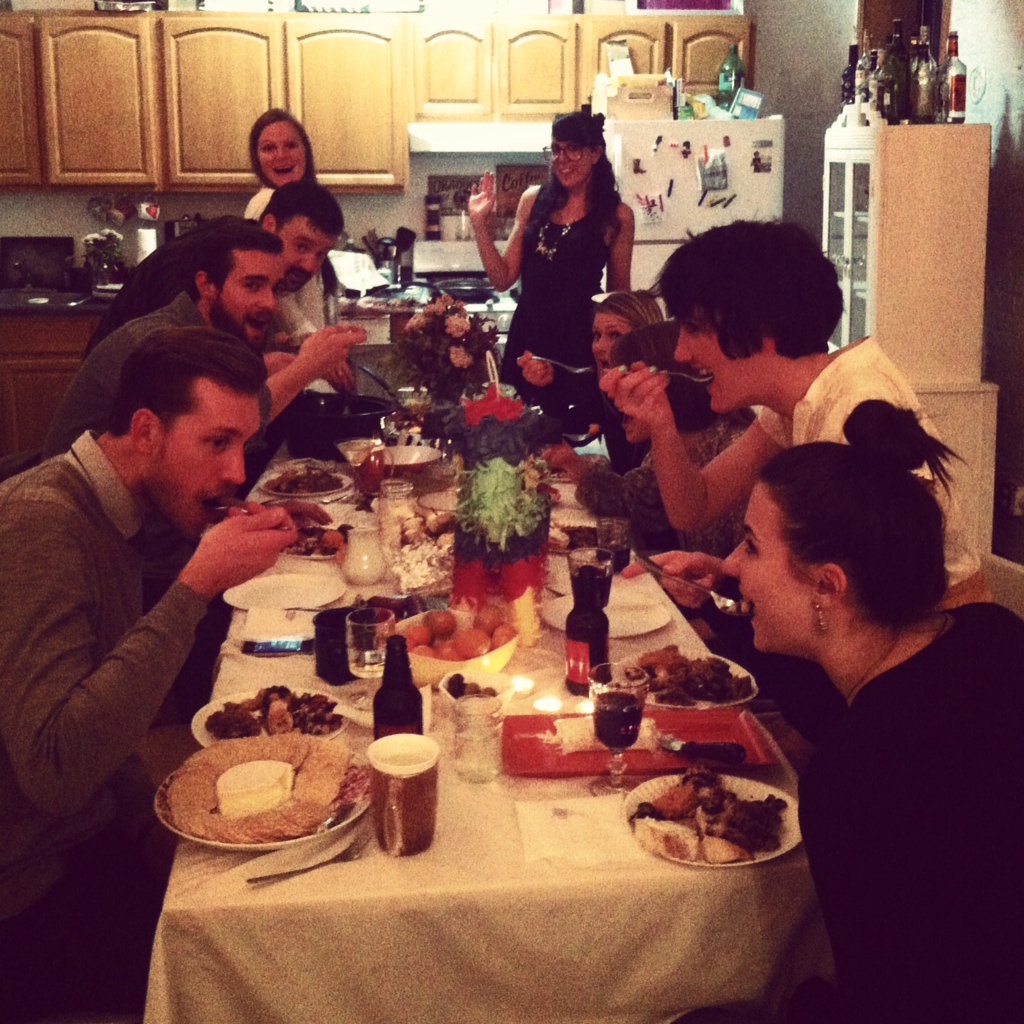
may have been the only photo snapped all night... too many other wonderful things to think about
may have been the only photo snapped all night… too many other wonderful things to think about. My new good friend Grace is taking the picture.

Ten brand new friends held hands around two pushed-together-tables last night to say grace over a delicious spread of humble, homemade offerings. Ten brand new friends laughed and toasted and slowly savored small kitchen victories on paper plates inside the concrete city that never sleeps. Ten brand new friends reclined with full bellies, drawing the joy of the night out into the morning.

This is a miracle.

God made a way for friendship – for ten new friends to linger over fellowship and to let laughter seep out the warehouse windows into the night.

He planned and ordained gatherings such as these before we ever made our first introductions. I imagine His delight as we act out the miracle He authored in friendship – as we celebrate around a table and enjoy one another.

Delight is the taste on my tongue this morning – Lord’s delight and mine (I imagine) are intermingled as I think about the next menu, the next guest list of practical strangers, the next gathering to glorify the One who ordained friendship in the first place.

Coming soon: the Amelia Bedelia kitchen experience leading up to the pretend thanksgiving party.

when you can’t get hidden enough

I don’t like people to see me when I’m out of sorts. I’d rather present a finished puzzle than dump jumbled pieces at someone’s feet, I guess.

But nobody is a finished puzzle and today I feel especially unfinished – especially jumbled and incomplete.

I don’t know what to blame, but I know there is a remedy. There are so many could-be culprits, but that’s a cop out and my heart knows it. Before I pull the covers over my head too early on a Friday night, I’m going to consult the shadows.

He who dwells in the shelter of the Most High
will abide in the shadow of the Almighty.
I will say to the Lord, “My refuge and my fortress,
my God, in whom I trust.” (Psalm 91:1-2, ESV)

The words forming in my mouth hours ago were not praises or prayers because the tip of my tongue was too full of fears. I had shuffled my way out into the open, out from under the steady shelter and into the battlefield, unprotected.

It isn’t the city, though I would like to say it is. It isn’t the bare walls in my apartment or all the things I wish I made more time to accomplish. It isn’t the rumble of disappointment in my belly when I am not passionate about everything I am doing. It isn’t the bigger, nagging questions about living eternally significant days when I am anonymous. It isn’t any of those things, though they are the jumbled puzzle pieces I’ve got cluttered at my feet at the moment.

God is calling me and all my jumbled puzzle pieces under His shelter, inviting me to abide in His shadow tonight.

Any kind of shadow is exactly where I wanted to hide right around 4 pm. I started thinking about dark chocolate just after lunch and reached for jolly rancher fruit chews at 2:15 hoping they would tide me over (sidenote: never substitute anything for chocolate). I snapped at two of my favorite students and caught myself several times just staring at piles of papers on my desk.

I left work early in search of a shadow, any kind would do – something I could get behind or under – something I could disappear into would have been ideal.

I settled for some cheap chocolate at the subway station, a run in Prospect Park, some red wine, switched to holiday tea, then curled up for a doze and more red wine, but I couldn’t get hidden enough. I couldn’t find the right kind of shadow that would give the right kind of escape.

Then, this.

He who dwells in the shelter of the Most High
will abide in the shadow of the Almighty.
I will say to the Lord, “My refuge and my fortress,
my God, in whom I trust.” (Psalm 91:1-2, ESV)

He who dwells… will abide.

If I dwell in the shelter of the Most High, then I will abide in the shadow of the Almighty. I love that the fulfillment of this promise is wrapped in our obedience, though it does not depend on it.

God will always be shelter, but we must choose to stand underneath.

When we dwell in His shelter, we will abide in the shadow of the Almighty. His shadow is not one of escape, but one of refuge. I imagine the Almighty casts the best and friendliest shadow, like standing behind Sully from Monsters, Inc. – a shadow you are not afraid of because it means there is a friendly giant standing nearby who is strong enough to protect and preserve you.

What does my heart say when I run underneath His shelter, to claim the promise of His faithfulness? I suppose it says something like, “My refuge and my fortress, my God, in whom I trust.” And then quickly prays for more belief that these words are true.

Some nights (most nights… well, all nights), any kind of shadow will not do. My heart is searching to stand in the shadow of something more powerful than my petty cravings or fears or self-absorbed complaints. His is the shadow I want to get inside, so I might be found holding fast to Him in love.

“Because he holds fast to me in love, I will deliver him;
I will protect him, because he knows my name.
When he calls to me, I will answer him;
I will be with him in trouble;
I will rescue him and honor him.
With long life I will satisfy him
and show him my salvation.” (Psalm 91:14-16, ESV)

tension tamer and hard hats

I’m just now recovering from the injustice of two days ago when the internet ate my blogpost.

I wrote the blog on my phone and I felt good about the productivity of my commuter inspiration… until I looked at it later and saw that only half of the post got published. The other half is in the belly of the internet somewhere, gurgling and hopefully making a big indigestive scene.

I am aware my frustration is ironic, given the content of the post – that it was about whimsy and surprise and the unexpected. But what do you do when all of the above feels more like a series of unfortunate events and less like a fairytale – when city commuting and daylight savings darkness and spilt pumpkin bread feel a little more like failure?

There is adventure inside those places, too, I know. But my belief has to be big enough to swallow up the doubt that it is not so. Or at least my belief has to be big enough to wrestle my doubt into submission. And sometimes that sized belief is hard to come by, hard to pray for, and hard to keep.

Tonight, tension tamer is my tea of choice.

It was in the birthday package from my mom, shipped from Iowa with other useful things like measuring cups, Grandma’s homemade hot pads, and the angel food cake pan that carried all the spongey goodness of my childhood. How she knew that my tension would need taming on this day in early November, I’m not sure. I think it’s probably a “mom” thing and I hope it’s hereditary.

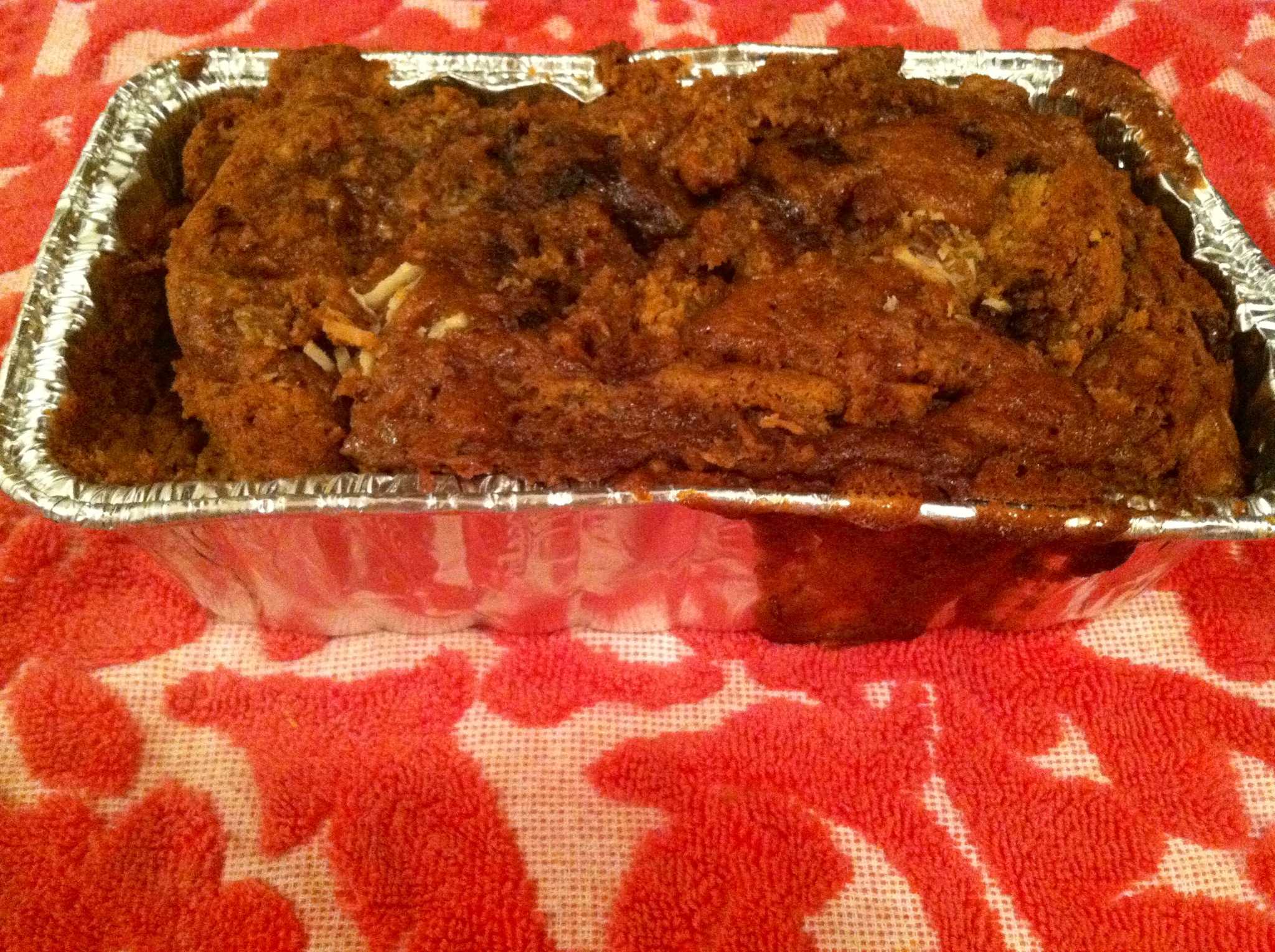
I do know that one of my loaves of pumpkin bread came out like this tonight. It’s more mangled in person, and for good reason: it somersaulted onto the oven window.

pumpkin bread crumble

I actually think it recovered well, all things considered. I think my roomie will find a way to convert it into morning deliciousness. She’s kind of a sucker for redeeming messes.

Maybe this is what it really means to worship with a hard hat – maybe it means headaches and heartaches and haphazard nights in the kitchen. Maybe the worship adventure is something that is always redemptive because this life is always broken.

Maybe the kind of posture Dillard thinks proper for worship in the Christian life is one that prepares for danger and doubt as much as it prepares for joy and song.

I am usually the joy-song type. Mostly.

I mostly love new things and crowded schedules and mishaps and detours. Mostly. Then, there are those days, those series of unfortunate events that remind me that my worship must be made of harder stuff. Anxiety isn’t believed away with joy-songs. They factor in, sure, along with tension tamer tea and well-timed laughter.

But there is a reason Dillard suggests a hard hat under the steeple on Sundays. I think it might be because worship can sometimes look like a demolition. It is not comfortable or pleasant, but it is right and it is good work.

My joy-songs are of a different kind when debris is flying overhead. The adventure is inside the danger and inside the belief that God’s identity has not changed. He is not less God and I am not less His child. My future is no less secure.

When your life so closely resembles Amelia Bedelia, you might remember every ingredient for vegetable beef soup except the beef. You might also forget the butter on the stovetop (in an effort to soften it for a cookie recipe when you do not have a microwave). In typical Amelia flare, you might somersault your pumpkin creation onto the oven window and then shove it back in the pan to bake the salvaged parts. You might miss the train that beat the daylight to the horizon and you might make one errand into seven.

And you might need to wear a hard hat if you plan to worship.

Because your heart will only respond to surprises with joy-songs if you are prepared for things to get messy. The only proper preparation is the Word taking root and establishing inside your heart and inside the series of unfortunate events. There is not a single curveball my Amelia Bedelia nature can throw in this life that the Word is not prepared for – not a single unfortunate event in this life that the Lord isn’t already planning to use for His glory.

Last weekend, I heard a message from Hebrews 12:18-23,

“For you have not come to what may be touched, a blazing fire and darkness and gloom and a tempest and the sound of a trumpet and a voice whose words made the hearers beg that no further messages be spoken to them. For they could not endure the order that was given, “If even a beast touches the mountain, it shall be stoned.” Indeed, so terrifying was the sight that Moses said, “I tremble with fear.” But you have come to Mount Zion and to the city of the living God, the heavenly Jerusalem, and to innumerable angels in festal gathering, and to the assembly of the firstborn who are enrolled in heaven, and to God, the judge of all, and to the spirits of the righteous made perfect,”

“Does anyone know the power we so blithely invoke?” Dillard asks.

Well, I’m learning at least. I’m learning that the power we invoke requires hard hats and a supernatural amount of perseverance. There are joy-songs, but they are not empty. They are hard wrought and wrestled from the grip of failures.

beware, a wakening God

“On the whole, I do not find Christians, outside the catacombs, sufficiently sensible of the conditions. Does anyone have the foggiest idea what sort of power we so blithely invoke? Or, as I suspect, does no one believe a word of it? The churches are children playing on the floor with their chemistry sets, mixing up a batch of TNT to kill a Sunday morning. It is madness to wear ladies’ straw hats and velvet hats to church; we should all be wearing crash helmets. Ushers should issue life preservers and signal flares; they should lash us to our pews. For the sleeping god may wake some day and take offense, or the waking god may draw us out to where we can never return.” Annie Dillard, Teaching a Stone to Talk, Harper & Row, 1982

It is Monday and I am still sleeping as I write this blog on my morning commute. The weekend was rich with worship and this wisdom from Annie Dillard frames it in right perspective.

Because worship is not safe.

As we sat on the fire escape for a Saturday picnic of mostly locally scrounged grub, it felt like the right amount of whimsy – like the best way we could have appreciated the beautiful colors and the conversation.

But that fire escape plan had materialized only minutes before, on the bike ride back to the apartment after hanging out in our neighborhood for the morning. It was something we stepped inside on a whim and then wondered if it might have been prepared for us.

I’m still thinking about how differently a child responds to surprise. When there is a firework or a hot air balloon or an ice cream truck, children get big eyes- they get wonder-filled and adventure-ready. It doesn’t matter that it wasn’t plan A or that it might be impossible.

They are always expecting the next adventure because it doesn’t matter whether or not they have shoes on or bare feet. They are just ready either way. Not because adventures are easy, but because it is easy for them to say yes when wonder hits them between the eyes.

It makes sense to follow a kite’s pattern across the sky and to cloud gaze and to chase grasshoppers. It makes sense to wonder and to be pulled into the wider story of worship – it makes sense that the chase might get mysterious and that they might run into danger. And they don’t need to dress up or pretend its any other way.

I want to live like this more.

I want to feel the fear being cast out because the wonder won’t let it stay. There isn’t room for both wonder and fear, because wonder is worship and it can happen inside danger and storm and drought. The right kind of wonder, anyway.

We are too safe. We dress up and act proper and we are never prepared for what a waking God might do with his limitless power and grace. We are not looking for it like children who hunt grasshoppers with hard hats. We aren’t prepared to be surprised and we are not ready enough to be wonder-filled.

I want to worship with a hard hat – to worship in a way that expects wonder and danger and is prepared for both.

lessons in intervals

My mom doesn’t have time to write emails.

She juggles four schedules, a full-time job with teenagers, foster mom shenanigans, and now post-lymes disease syndrome is in the mix. She doesn’t really have time to read my blog or call me on the phone or listen to my heartsickness because she has a world that refuses to fit inside each day’s minutes.

I was standing on the subway platform waiting for the J train at the Crescent stop last week and the tracks made a very squeaky interval that sounded like West Side Story. It sounded like, “There’s a place for us…” and the phrase started accompanying the train’s song.

It took me back to all those nights with my mom in the piano room where we would practice listening for the “NBC” interval, the “happy birthday” interval and all those other intervals. She would play one and we would guess a fourth or fifth or seventh. I’m not sure why she had time to teach us things like that or how she had time to make them fun. We weren’t paying her for piano lessons and it wasn’t the easiest activity to undertake with five hooligans in a constant game of chase around the house.

But, I remember sitting there and sometimes rolling my eyes through my lesson. I remember her exasperation and her persistence. I remember thinking that she wanted me to learn intervals more than I wanted me to learn intervals.

“There’s a place for us…”

It’s like playing word association with melodies – like hearing fragments of stories sliding around on the breeze. And, anyway, hearing that interval from West Side Story was like comfort food. I was the only one standing there, looking at the sun going down and trying not to sigh into the New York commuter face. And I tasted the comfort in those notes – notes that took me back to the nights I learned intervals sitting next to my mom on that old, dented piano bench.

Yep, I thought. There is a place for me here, a place for us.

I got an email the other day from my mom.

Did you know that the color of the tree leaves in the fall is actually the ABSENCE of chlorophyll (which is required for photosynthesis)??

So let’s get this straight.  The leaves are more beautiful in color when they are empty of the thing that makes them green.  Hm..

Am I more beautiful when I’m empty?  Is this what 2 Cor 12:9 means?

 “My grace is sufficient for you, for power is perfected in weakness.”

Leaves get empty and what is left behind are cold fireworks that float to the earth in friendly piles. Leaves get empty of what makes them alive and that is when leaves get beautiful.

Why did God make even death and absence beautiful? Why did He get so creative with the season that ushers in winter?

I imagine he could have done many other productive things, tended to many other beautiful endeavors. Why think to drain the leaves of life and replace them with cold, colorful flames?

Because even (and especially) in this detail God is loving us. He is gently and divinely displaying His glory. He is drawing us into wonder, into whimsy and wide eyes. He is painting his beauty in the emptiness of creation and (maybe) revealing that He can transform something dead.

It was an email like interval lessons and my mom doesn’t have time for any of it. She is weak, like all of us, and today I’m glad for the lesson on power in weakness because we both need it. She is probably taking a lymes-induced nap before powering through Sabbath evening while I warm by afternoon window sunlight and think about the beauty of emptiness.

The first part of the Sabbath felt smooshed and time empty. It felt a little restless and run hungry. I needed to hear that familiar interval – the sound of Scripture reminding me that I shouldn’t ever fight to be full. I needed to remember that God considers His creation a worthy investment – a fitting canvas to display His glory in nonsensical ways.

always believing

We can be all kinds of emotional. All kinds – nervous, joyful, sad, fearful – all kinds. It seems like mine have run the gamut here in NYC. I can sink in sadness and in the very next moment be heaped in hope. They are all mixed up here in NYC; maybe emotions are mixed up everywhere.

But in every kind of emotion we must be always believing.

I think this is taking deep root in the soil of my soul these days and certainly as I read the lectionary reading this morning from Psalm 119.

I have chosen the way of faithfulness;
I set your rules before me.
I cling to your testimonies, O Lord;
let me not be put to shame!
I will run in the way of your commandments
when you enlarge my heart! (Psalm 119:30-32, ESV)

I love to read the conviction in David’s declarations, because I know he was an emotional guy and he had every right to be emotional. Chased by death and failing kingdoms and family matters and desert armies, David lived the kind of life that seemed to warrant fist shaking at the sky.

But inside his mixed up emotions, David chose the way of faithfulness. Because he was not helpless against the affections of his heart. David set the Lord’s rules before him and clung to the Lord’s testimonies.

In choosing and doing these things, David is actively believing that this is the best way to move forward with mixed emotions.

Sunk in sadness or heaped in hope, David chose to run in the way of the Lord’s commandments. I can almost hear the pulse of his feet pounding the desert path in the direction of the Lord’s commandments. It sounds strange, even as a word picture. Why would he run in the direction of commandments – in the direction of something that appears to fix his feet in one place? Why would David love the Lord’s rules that seem to restrict instead of set free?

Running is freedom, at least it seems so to me. It means throwing off hindrances and making steady progress in a particular direction. And David is running in the direction of the Lord’s commands because freedom gives birth to freedom. The Lord enlarged the heart that powered his running feet and with his freedom he ran in the direction of faithfulness. David believe that the Lord would keep His promises and that being near to the Lord was the best destination, the best lifestyle, the best routine – that meant being near to His commands.

David knew inside his heart of mixed emotions that the Lord’s commands were not a straight jacket but a mysterious wardrobe where marvelous things were hidden. David believed the Lord’s commands would grant him more freedom than anything the world could promise him.

The Lord granted David freedom to run and with that freedom, David ran in the direction of most delight – the way of pleasing the Freedom Giver.

I can’t imagine experiencing all the range of emotions tangled up inside David’s heart while he was hidden in caves or castles or closets. But I do know where he found strength when he was sunk with sadness or heaped with hope. He found strength as the Lord grew his heart and he ran in the way of faithfulness.

He chose to chase the mysteries of the Lord’s commands because He wanted to please the Freedom Giver… and because (I think) he knew that the most joy in this life would be found running toward and not away from God’s gracious constraints.

In every kind of emotion, God grants the grace that we can be always believing.

stay and wait for the “yet”

I wiggled my way into a Tuesday night home group with no-bake cookies stashed in all the tupperware containers I own. I guess when you are new in town and trying to find the (horribly cliché) “place you fit in,” baked goods are never a bad idea (Let’s be honest, baked goods are always a good idea).

I added my no-bake cookies to the offerings on the coffee table and made a couple bad jokes so the small gathering knew I wasn’t trying to play it cool and the cookies really were just a shameless way to endear myself into the group.

Sometime after the awkward introductions, we got buried in a discussion over doubt. The sermon the previous week had been about the doubt of John the Baptist in Matthew 11. From prison, the most sold out of all Jesus’s followers sent messengers to ask if Jesus really was the One he had been waiting for, preaching about, and prophesying of – John the Baptist sent messengers to find out if Jesus really was the Messiah his entire existence had proclaimed He was.

What a curveball, to think about doubt in this way with this group of strangers and to arrive at the place we did. I don’t mean thinking about doubt is a curveball – especially here in hipster heavy Brooklyn where knowing anything for sure is very unhip. We all agreed that our generation doesn’t have a problem accepting/engaging/encouraging doubts. We are top heavy with them and at times paralyzed by the balancing act.

The curvy part of the doubt equation is the tension it takes to stay when doubt comes. Because doubt gives way to fear very quickly. Christians often run to the hills and stand beside pagans shouting doubts at the cold, black sky and then run away before ever an answer can be returned.

Where are you, God?
Where were you when my sister died? and when my heart got broken? and when I failed at work and life and love?
Where were you, God and why don’t you answer?
Are you even real?

And as quickly as the one-sided conversation began, it ends as we pull away with smug satisfaction that we got no reply – as if to say to the cold, black sky and everyone else, “See, I was right. He isn’t there.”

But, that’s not doubt. That’s fear.

Doubt is buried somewhere in the middle of belief. It’s a tension that trains us to believe better, stronger, and deeper in the truths we know. Thomas wasn’t the only doubter and neither was John the Baptist. David doubted too, and he doubted well… and he stayed. He wandered out (of his own volition and not) into the hills and deserts and shouted out his doubts at the cold, black sky.

And then he stayed.

He stayed until his heart preached these true words to him:
Yet you are holy.

David wrestled and John the Baptist wrestled and Thomas wrestled and now we wrestle the same and different mysteries – all those things just outside the reach of our minds and hearts. And if we stay, we will also say with David, “Yet you are holy.”

My God, my God, why have you forsaken me?
Why are you so far from saving me, from the words of mygroaning?
O my God, I cry by day, but you do not answer,
and by night, but I find no rest.

Yet you are holy,
enthroned on the praises of Israel.
In you our fathers trusted;
they trusted, and you delivered them.
To you they cried and were rescued;
in you they trusted and were not put to shame.

But I am a worm and not a man,
scorned by mankind and despised by the people.
All who see me mock me;
they make mouths at me; they wag their heads;
“He trusts in the Lord; let him deliver him;
let him rescue him, for he delights in him!”

Yet you are he who took me from the womb;
you made me trust you at my mother’s breasts.
On you was I cast from my birth,
and from my mother’s womb you have been my God.
Be not far from me,
for trouble is near,
and there is none to help.
(Psalm 22:1-11, ESV, emphasis mine)

When John the Baptist sent the messenger to ask Jesus if He was really the One, Jesus responded with Truth. He responded with the only thing that could come from His lips and the only thing that can come back from the cold, black sky if we stay long enough to listen: the Word.

“Jesus replied, ‘Go back and report to John what you hear and see: The blind receive sight, the lame walk, those who have leprosy are cleansed, the deaf hear, the dead are raised, and the good news is proclaimed to the poor. Blessed is anyone who does not stumble on account of me.'” Matthew 11:4-6

Sometimes fear runs our footsteps away from the hills and the cold, black sky before Truth can set us free where we stand.

John the Baptist was locked up in prison without any hope of freedom and his doubt was mixing fear like a cocktail. He wanted some confirmation that his life had not been lived in vain and he was hoping the sign would appear in the form of loosed chains.

His belief was tenuous, his doubt building tension in between and around the solid rock foundation of his faith. But he stayed to hear Jesus say, “Look at the ways I fulfilled the prophesies. Remember?”

John the Baptist believed, but doubt was threatening to give way to fear when belief didn’t seem to be holding up inside a jail cell. And the first and best Jesus could give him to bolster his belief was the Word – Himself as the fulfillment to prophecy and evidence of His faithfulness.

Just as Jesus endured the cross and scorned its shame for the joy set before him, our duels with doubts are not without joy because we are never without God. Though he may seem far from us and far from our generation and far from our shouting, fist-shaking nights under a cold, black sky, He is never not present.

And in His presence is fullness of joy.

This, I believe, is what David and John the Baptist and Thomas experienced in the middle and on the other side of their wrestling. Because they stayed to see that God is present and in His presence is fullness of joy.

If our doubt is not swallowed up by fear, we will stay and our tension will give way to greater belief that God is who He claims to be and keeps all His promises. If our doubt is not swallowed up by fear, our greater belief will meet more doubt and tension and joy because God is always the same. His claims are never untrue. His promises are always fulfilled. His Word can always speak straight into the cold questions.

And here is hope for a generation who hasn’t the courage to stay and wait to hear the word, “Yet…”

*NOTE: My mom has since pointed out the irony of my calling no-bake cookies “baked goods.” Two points for the mom team. She got me there.

if my heart wrote my soul a telegram

This is, ahem, very personal. If that makes you uncomfortable, you might want to read something else today.

Remember in the Sound of Music when Leisl tells Rolfe about the telegram she would write him as they exchange teenage love declarations in the gazebo? She started with, “Dear Rolfe (stop)” and then he called her a baby.

If my heart wrote my soul a telegram yesterday, it went something like this:

I have two fears (stop)

I wasn’t prepared to feel what I felt or to feel it so intensely. But, the telegram didn’t get sorted until about 11:00 pm last night when I finally stopped the repetitive rhythm.

Yesterday, Patrick and I trekked up to the INHABIT conference on the Upper West Side, sponsored by the International Arts Movement. We listened to plenary speakers and attended breakout sessions with several hundred other folks from across the country who care about the ways art intersects with faith and how that translates into culture care.

And in the middle of all the note-scrawling and introductions and processing, I realized I had never invited someone into this space before. This very metaphysical, very precious and precarious space I had tucked deep away where it couldn’t get broken.

Maybe it’s what a comic book junkie feels at a comic book convention or what a car enthusiast feels at a car show or a musician feels about the symphony. I know I’m not the only one who feels uniquely at home in a very unhome-like space because I am surrounded by people who speak the same language.

This is what I feel when I pack my notebooks and pens, when I check in at registration, when I listen to the philosophical implications of architectural structures and the words communicated through a brick used in its traditional function or adapted for a new purpose. This is what I feel when I am around people asking questions about beauty and meaning and longing – people who wrestle and wander and wonder because it feels right to do so.

Eric Liddell’s painful conclusion in “Chariots of Fire” paints well the picture of this affection and deep delight, “God made me fast. And when I run, I feel His pleasure.”

I’m not sure how exactly God made me – I am not fast like Eric Liddell, nor am I particularly brilliant in a profession, nor am I an established or even struggling artist.

I just know that when I work the muscles in my brain and respond with the muscles in my heart and typing fingertips, I feel His pleasure. I feel His pleasure in a strange and not altogether happy way, but in a way that I do not feel anywhere else. There is a familial comfort in knowing that other people want to use the same language, to plumb the same depths, to wrestle the same lions – believing it is a worthy pursuit and even a pursuit that reflects and delights our Creator.

These types of gatherings have been home to me for years and there are few people who share the same affinity. But that’s never mattered before. I do not expect people to understand this language and I’ve learned to filter my excitement and my conclusions and my muddled processing.

But yesterday, the fear-filled telegrams pushed up behind my eyes. I felt a bit like my self-confident exterior got cracked like an egg and all my fear dripped out. So, I have two fears.

I am afraid of being misunderstood.
I am also afraid of being dull.

I am afraid that my love for beauty and questions and doubts and language and words (and all those things I have hidden in a precious and precarious place) will not make sense to the person I love the most. I am afraid words won’t come and when they do, that they will tumble out incoherently.

I am also afraid that my rambling and circular processing and childilke chasing will make my favorite person bored. I am afraid he will not enjoy the moment in a superlative way and that his lesser enjoying will be my fault.

I am not saying this is rational, I am just saying this was the telegram that I was finally able to communicate to Patrick last night after we rode his motorcycle out of Manhattan. Between sighs and frequent pauses in our late night, neighborhood pizza joint, I tried to explain that I didn’t need him to love what I love or to understand why this language feels like home. I explained that I didn’t need him to be someone who loves conferences and note-taking and the cultural implications of the functionally changing purpose of bricks.

I just don’t want to feel crazy.

I just want so much for him to experience the superlative delight I feel when I’m around this language. Whatever that is for him, I want to say yes to it. Part of what pained me yesterday was thinking that I had asked him to live less in the full delight God prepared.

In his typical and patient way, he told me I wasn’t crazy. He really said a lot more, but I think I just needed to hear that I wasn’t crazy and that I hadn’t ruined his day by making mine great.

I didn’t expect to learn this lesson along the way of love. I really didn’t expect to struggle so sincerely, but I guess I didn’t know how precious or precarious this language was to me.

And in this lesson learning, I am bending to the beauty of Christ’s love. Alone, I can hide things and keep them safely hidden. Alone, I can pretend my vulnerabilities are transparent and my guard is appropriate. But in love, I can see how tenderly Christ completes my affections – how perfectly he understands my needs and how patiently he provides.

I did not know my soul required this kind of care and I was overwhelmed yesterday when I realized Christ has been caring for me in this way all along.

As I receive love (by way of opening up my hidden spaces), I can boldly believe it casts out fears.

Two fears is too few, but it was the number needing cast out yesterday and I believe Christ is able. Not only that He is able, but that He promised to be the One who casts out. I believe that.

I am so thankful for these hard lessons, for these painful purgings of what I didn’t know was hidden.

My uncle sent me the above song today, a song I have returned to when I need a reminder of Christ’s sufficiency. Today was a beautiful day to be reminded.