I will lift up my head

My body has been tilting toward the start of advent for a long while. The longest stretch of the liturgical year is ordinary time and, by the end of it, there is a shift inside my bones– a kind of painful dissonance that needs attention if not resolution. Every year, I become a student of the prophets in the Old Testament and every year I learn something knew about the judgment they announced. Judgment doesn’t sound like something you’d put on a sugar cookie at Christmas time. You won’t find “judgment” etched in calligraphy on a greeting card and it will never be the theme of a holiday party. But judgment and darkness is exactly where my bones can make sense of the evil world where we live. Because my bones live inside a temporary, dying world where all is not well. All is at war, wrapped up in self-preservation and protection and kneeling at the throne of prosperity. All is not well.

I used to think we were Easter people, Christians. Our greatest festival is celebrated in the victory of a King overcoming death and offering eternal life to anyone who believes! Alleluia! I still think that is true. Just as true as the best Easter cheer, though, is the honest Advent groan. And in Advent we groan… bellow even from the very deepest parts of us, and we join all of creation in our recognition of the reality that things are not as they should be. As much as I would love to think the streamers and champagne toasts and overflowing plates of the Easter feasts never end, they do. And we are left with reminders that the systems and structures and powers and personal agendas of this present world are laced with darkness.

Fleming Rutledge famously (and ominously) reminds us that “Advent begins in the dark.” This is a holiday sentiment I can get behind. It sits honestly in my bones. Advent begins in the dark, but not without a hope for the Light that no darkness can overcome. This past Sunday, all my dreams of apocalyptic texts preached came true and we heard a sermon I’m still swimming through. The New Testament text came from Luke 21 and by the time he read verse 28, he had already basically read a script from a graphic end-of-world movie that has all the worst and horrible parts. But, when he got there to that verse that followed all the judgment, I thought, “this is what it looks like to live without fear.”

Luke 21:28 “Now when these things begin to take place, straighten up and raise your heads, because your redemption is drawing near.”

Straighten up and raise your heads.

Advent is when we remember the first coming, look forward to the second coming and are present in the many comings of God into our lives on a very ordinary basis. But, the second coming will not be like the first or like the many comings we experience as we see a sunrise or feel the comfort of an embrace. The second coming will be the most terrible thing we will have ever witnessed because all that has wrought destruction on this earth will meet a fair and impartial judge.

I remember, growing up and hearing about the blood to the horse’s bridle and the wars and chaos and famines and terror. I remember my little girl heart thinking, “I do not want to be around when that happens. Please, God, don’t let me see that.”

But that doesn’t sound like the ache of all creation. That little girl was afraid of Jesus’ promised second coming. That little girl didn’t have a right picture of where belief placed her in that scene. That little girl didn’t know that she could raise her head, because she would be joining the groan of all creation for the Savior who had finally returned to make all things well. The destruction is deserved. But as terrible as the destruction will be, my eyes will be on my Savior, the Lifter of my undeserving head. And this is why Advent begins in the dark, but not without joy. Not without hope. Not without any light at all.

A friend sent this video to me awhile back and I’ve never seen or heard something capture the beauty and terror of second coming of Jesus quite like this. The innocent, pure tones in the children’s voices are haunting, but not afraid. It is the chorus of those who know their Father and are eager to reunite with Him, eager to meet the light that outshines the sun, eager to truly have all needs met and all comfort given. I want to pair my aching in Advent with that kind of eagerness for Jesus. Because that’s what hope does. It doesn’t shrivel with the true sorrow weight of the world, no. Hope ALSO leans with eagerness toward the Promise, because the One who keeps it is steadfast.

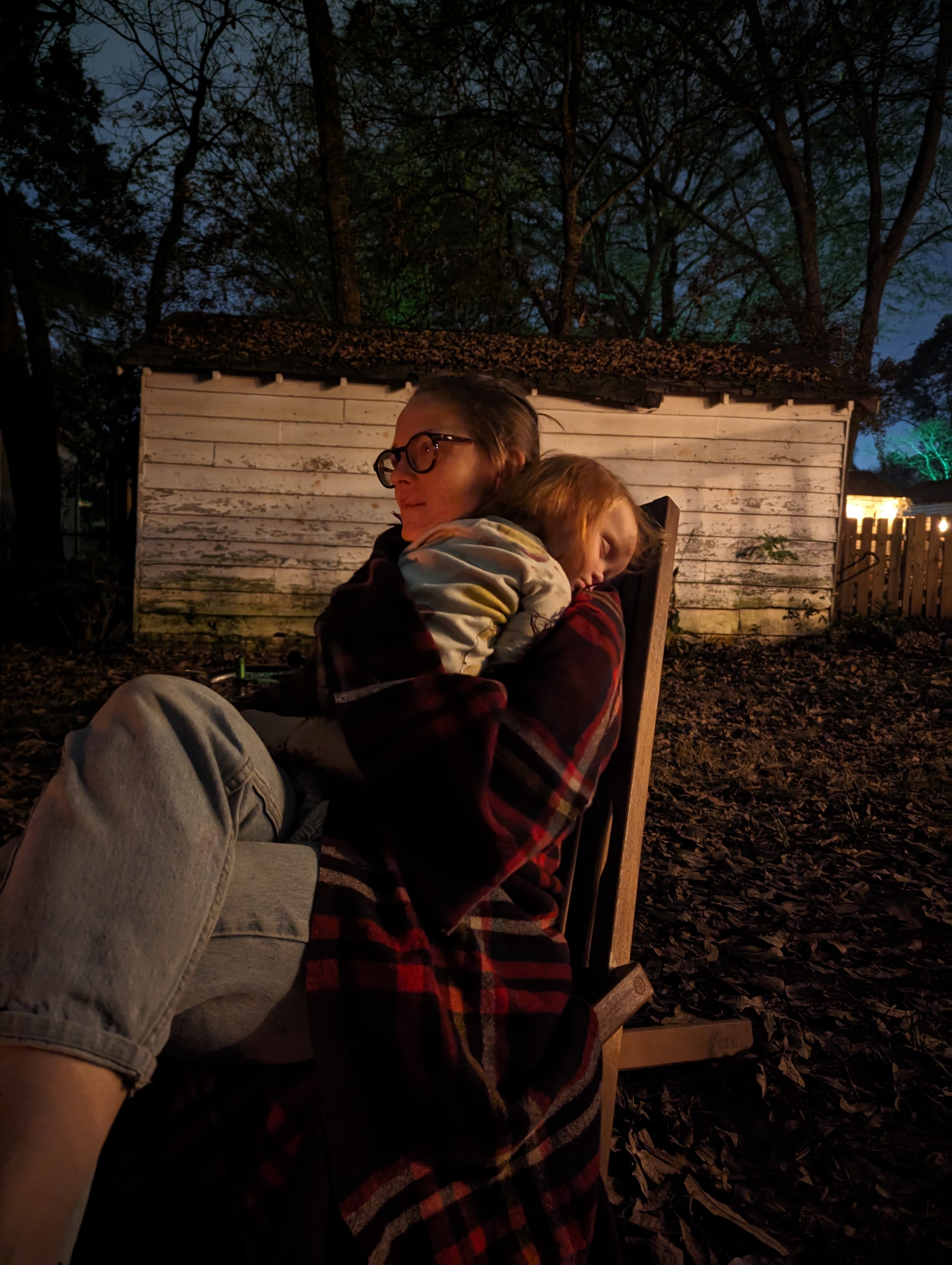
And now, there is a tiny baby in my belly. The shock of it was existential in a body already fighting for stability. Yet, I hear the announcement within my own bones: though it is dark here, it is still worth life. Though this is not forever, it is still worth the right now. And I wonder, does this new life in my belly know that a womb is a temporary home? Does she anticipate her own transition into the next transitory space of mortality? Does he feel trapped inside a womb or safe inside a home?

Maybe it is both.

And just like that, we enter into this season of the coming. The aches and pains and longings that the world already feels in wars and wickedness and earthquakes and estrangements doesn’t have to take a back seat to happy endings. Many aches and pains and longings won’t have those. But, we do have Jesus, come. We have Jesus saying no to the throne and the glory and the fame and the comfort of heaven. We have Jesus saying yes to climbing inside the temporary shelter of a womb, growing like an impossibility of grace. We have Jesus being human and dying human and raising God and conquering death. And we have Jesus, coming again.

And when He comes, I will lift up my head.

the grace you’ve been given

O Lord, we pray that your grace may always precede and follow after us, that we may continually be given to good works; through Jesus Christ our Lord, who lives and reigns with you and the Holy Spirit, one God, now and forever. Amen.

It’s always humbling when a children’s book speaks Truth that (ahem… pushes glasses up on nose) adult literature has progressed beyond. I’m not surprised anymore, but I’ve noticed that if I don’t keep a curious posture, I might miss it altogether and be like a lot of adults out here skipping childlikeness like it’s last week’s meatloaf.

So, I had to pause when Bayard the Truthspeaker was talking about a son who had strayed away from his father and rebelled. I even read the whole exchange twice for my kids (let me not lie, it was for me).

“Does a tall man deserve to be tall? Does Prince Steren deserve to be the son of a king? A bird might think he deserves to swim as well as a fish, but if he sits moping on the riverbank instead of using the wings God gave him, the fox is going to eat him. “Your brother would rather have his own way than be happy. He’s thrown away the grace he was given because it’s not the grace he had in mind.” The Truthspeaker paused to reflect on that. “There’s not much hope for a person who won’t live in the grace he’s given.” – Secret of the Swamp King by Jonathan Rogers

The Collect this week is simple, but the real-life  working out of it can sometimes feel complicated. What my mind may grasp and even my actions may reflect, my heart can be sluggish to believe. We know the heart is both deceitful above all things (Jeremiah 17:9) and the wellspring of life (Proverbs 4:23)– a true and literal war within our bones that reveals what we want the most. I want the fruit of the Spirit, but I also really want to be very good at something and to binge watch a cooking show and to forget the laundry and to escape inside a book. My childhood pastor used to reference the often quoted Psalm 37:4, “Delight in the Lord and He will give you the desires of your heart” and exhort us that it was our “wanter” that would ultimately be changed to desire what God desires for us. 

It’s taken me decades to begin to understand that changing my “wanter” is not a task God has given me, but a grace that precedes and follows after me. Changing my “wanter” is not so much a prize I can win, but is accepting the reality that the victory is won and I’m clinging to the cloak of the One who has the crown. My current pastor once preached a sermon where he described us arriving in heaven holding on to the edge of Christ’s garment. My “wanter” is concerned with that kind of clinging, knowing that only my closeness to the Victor will bring me into glory.

The grace of God– the grace that hems me in on all sides– this very gift of grace is initiated and accomplished by the Maker Himself. And we pray we would align with the reality of that truth that we may be given to good works. Because, as we well know, grace without works is dead (James 2:14). And works without grace is a life of striving. The only way to do any good thing is to notice that it is grace that both paves the way and pulls you along the road. 

I sometimes read books in the philosophy section and recently the book “On the Road with Augustine” has been quite the ride. The journey of faith is a strange one, full of paradox, and this book has been a comfort to me especially knowing that so many have considered the questions that seem to constantly inhabit my mind and my time. In the chapter on freedom, James K.A. Smith quotes Gabriel Marcel,

“You are hedged in; you dream of escape; but beware of mirages. Do not run or fly away in order to get free: rather dig in the narrow place which has been given you; you will find God there and everything.”

And you, friend– do you question the place and space where God has you? What grace have you been given this day, this season? It may not be the grace you had in mind. Maybe you had in mind different neighbors, a more fulfilling  job, a tiny home on a mountain in Spain, a byline in the NYT, or a full family photo on your desk. But, what do you have? Dig in (with me!) to that grace and we will find God (Jeremiah 29:13) together.

**wrote this for my church this week and thought I might as well re-post here**

Christ the Breaker, Peacemaker

Winter becomes official next week, the darkest day of the year signaling its arrival. I expect gloomy days and meet sunshine with skepticism. The pecans and dogwoods reach crooked angles up into the sky and the crepe myrtle stands like a skeleton. Does nature choose to be wintered? It seems to just happen, despite its own transformation every year into full spring and summer beauty. Does nature feel the death of it, before the life of it breaks forth?

We’re studying animals in winter for school and I’m convinced they have a better bodily understanding of the season than humans because they aren’t distracted by sweater weather and hallmark movies. They are fully present, doing the work of preparing and then presiding over their bodies when the elements are against them. The painted turtle plans a winter without air, deep in the cold mud under a frozen pond where the it will stay for 6 months until spring without breathing once. The American black bear will give birth to young while asleep in hibernation. Other animals are less dramatic, but none of them are escaping their bodily realities.

We still hear birdsong here in December, just slower and spaced out. We see the occasional Flying V formation overhead, late arrivals for a warmer winter home. Their melodies bounce across the neighborhood— their chatter lilts and pauses, comes forward and then fades behind children and cars and planes high above. Is the sky the backdrop to their dramatic song or is the song the accompaniment to the early nightfall?

We make our deliveries, down Langston and across Sylvan Pl and the kids do some of it while I peek through the front window. I can’t figure out how to teach Foster his letter sounds while making bread and tending the baby, but I am humbled by my love again with this life— with this neighborhood and its trees, with our neighbor friends and the honesty of this time of year. The liturgical year is my insides turned out— my heart’s constant forgetfulness of God’s condescension and redemption needs the rhythm of Advent and Christmas and Epiphany and Lent and Easter to stay in step with the Spirit.

And I love Advent— the heavy despair and ache of it against the backdrop of tinsel and lights and holiday parties. I like the idea of making my body to bend, to form my longing for help into the shape of kneeling because all the lists and goals and scribbled schedule maps get lost in stacks of watercolor paintings and play dough scraps. I reach for a grid outside the one I would make myself because in mine I am the master of ceremony. I am the one who leads the way.

“The One who breaks open the way will go up before them;
    they will break through the gate and go out.
Their King will pass through before them,
    the Lord at their head.” Micah 2:13

Here, in Advent, I meet Christ the Breaker— the King who leads the way. As the well-known characters of the Christmas story find their place on the hill and the camel journey and in the manger scene, I plod through these days both aware of the complete miracle of existing and aware of my cavalier attitude toward my Maker’s God-made-flesh reality and promised coming again.

The King’s coming would make a way for us, but it didn’t look like the Red Sea. He had already done that. Centuries and generations of miracles and signs and wonders and parted seas. The scene closes in Malachi with all the drama of a finale. These words shake the core of me, picturing all those Ebenezer towers and oral histories that crowd the Old Testament pages.

“For behold, the day is coming, burning like an oven, when all the arrogant and all evildoers will be stubble. The day that is coming shall set them ablaze, says the LORD of hosts, so that it will leave them neither root nor branch. But for you who fear my name, the sun of righteousness shall rise with healing in its wings. You shall go out leaping like calves from the stall. 3 And you shall tread down the wicked, for they will be ashes under the soles of your feet, on the day when I act, says the LORD of hosts.
“Remember the law of my servant Moses, the statutes and rules that I commanded him at Horeb for all Israel. “Behold, I will send you Elijah the prophet before the great and awesome day of the LORD comes. And he will turn the hearts of fathers to their children and the hearts of children to their fathers, lest I come and strike the land with a decree of utter destruction.”

Malachi 4:1-6

And then, nothing.

No response to their questions or pleas or praise, just… silence. But, I imagine the families of those who held on to hope would speak these words to each other. I imagine in the ordinary making of bread and tending of sheep and exchanging goods at the market, there were families who feared the Lord, desperately holding on to hope that He would not be silent forever. And with each generation, I imagine the longing grew for the unfettered joy of a newborn calf set free from a stall. “The sun of righteousness will rise, with healing in his wings,” but Christ the Breaker would not come with a glorious entourage and resplendent power.

Jesus was growing inside a womb as a baby and would come into the world through a birth canal. The fullness of time was his due date. The King’s going up before me sounds like the soft lantern light on a warm, summer night. But, I wonder if His making a way is more like a bushwhacker … because the evil is thick. The hurt is not a morning fog but an advancing army. And Hope is so impossible— an insult, almost, to the depth of despair. For the Israelites, that depth lasted 400 years. And they are not alone in their suffering. We join brothers and sisters, a cloud of witnesses the world over and throughout history who sit in a place of longing before a holy God, believing He will rescue them but not knowing when.

The peace we long for, the peace we find in Christ, is forged with active rebellion against the evil forces of the world that would rather war. “For He himself is our peace, who has made us both one and has broken down in his flesh the dividing wall of hostility.” Ephesians 2:14

We are loved by the One who promised to make Peace for us with God forever so that we can make peace today exactly where we are.

The Sabbath soup sits on the stove, preparations are made for a day of rest tomorrow before Advent dinner begins in the evening. A series of fortunate events today meant that we had company for much of our preparation and guests for sabbath dinner. We guessed on the masala chicken, let the baguettes boast an extra crunchy crumb, and tried a new granola recipe. We fluttered from room to room and explained again that we are a team and we are preparing to enjoy a day of rest tomorrow. We followed behind helpers and helped their helping. I confessed, again, at dinner my impatience this week and I’m sad to hear the words in my mouth.

We will light a candle of joy tomorrow and I will kneel now in prayer. And, God, would you help me get behind you as you do the Breaking and the Peacemaking?

signs of life

Sun is speckling, slanting across the kitchen counter, then the dining table, the dresser in the bedroom and now the smudged glass of the hutch. A clock counting the daylight hours, I count too. My eyes follow the golden spotlights and the shadows.

“Christ is Light!” The second littlest proclaims after dinner. “In Him there is no darkness,” we respond. What a ride candles are with little kids. On Sunday’s advent dinner, a mess of fingers rushed for the lighter, the precarious (yet very cool, vintage) five candle holder dipped and dived as a separate mess of fingers held it “steady” for lighting. Life.

Outside, the rain and clouds made it feel like night around 4 pm, winter cold hanging in the damp dark. Inside, the oven was still warm and I opened the kitchen window to invite a breeze between our bodies. We were many, filling out every room and spilling potluck dishes on every counter. Abundance. Inside the dark day, inside the dark season, inside the dark world– we are bright defiance. Pièces de résistance.

Our neighbors shared a tip a few years ago after we gave them a young crepe myrtle from the abundance we dug up from an acreage “thinning their plants for maintenance reasons.” (Praise be!) When we apologized to our neighbors because we thought maybe the tree we gave them didn’t survive the uproot and replant process, they said, “Oh, actually… it looks dead, but if you just scrape the bark you can see it is green underneath. Ours is alive, so we think it’ll have leaves in the spring!” Praise. We ran to see if ours survived, too.

Our front lawn is a sad mess of wet, brown pecan leaves. We are now choosing to compost our leaves by doing absolutely nothing about their gathering every fall, but it does not look good or tidy or festive. We shoved our shoes in their cubbies and under dressers so that there was space on the mat for the friends who would come for advent dinner Sunday. We knelt to pray at 5:45 pm as a family that God would help us be good hosts, even if it was a small group. That little rubber mat didn’t stand a chance. The shoes piled as the plates filled and I had to walk sideways in order to make the circle from dining to living room and back again. Warmth stretched out from my middle, as Pat prayed for the provisions and kids crawled out from under tables.

We ate well and drank deep in that special, winter potluck way and then huddled together to mark another week of advent– to name the shadows where light appears to have faded almost completely in this present darkness. We prayed peace into wars and sibling fights and meanness and anger. We prayed peace where it is impossible. We prayed for miracles.

“All is not lost. Mm-mm.”

My body sags with the desperation of it, now Tuesday and sunlit. But it is still advent dark. Our prayers for peace inside wars and fights and meanness and anger, well… It is still advent dark. So, I hear this song on repeat and remember that planting seeds of peace is obedience.

We prayed the Collect to finish out our time on Sunday. I’m still learning these rhythms.

BLESSED Lord, who has caused all holy Scriptures to be written for our learning: Grant us so to hear them, read, mark, learn, and inwardly digest them, that by patience and comfort of your holy Word, we may embrace and ever hold fast the blessed hope of everlasting life, which you have given us in our Savior Jesus Christ. Amen.

The time for teaching moments had passed. The kids attached well to the illustration from Isaiah 11 that Jesse proclaimed over the group, “The lion shall lie down with the lamb… the wolf and the goat… the baby and the cobra…” These are not relationships of peace in the kingdom of the world. This vision is the hope of a peace that Christ accomplished being fully realized on this earth– every inch of it. Their right answers earned them a Ukrainian chocolate that some of our guests brought to share from their home country. God be praised, but those kids weren’t hearing more lesson. So, we simply spoke the collect together. We let the words rise in a chorus above our heads, an unlikely choir of ages and stages and backgrounds. And, we may not have known it, but we were praying for the seed to be planted in us. We prayed that the Word would actually take root in us, so that we ourselves could be the very planting of the peace that Christ accomplished.

May these seeds defy the flippant scattering and the death underground and the complicated germination and the unlikely conditions and the hungry squirrels– may these seeds of peace sown in obedience bring about an otherworldly rest for the weary, the war-torn, the wintered and the waiting.

Advent is still so dark. When there is no sign of life, may Christ light the way to plant the seeds of peace. AMEN.

the habit of meeting together

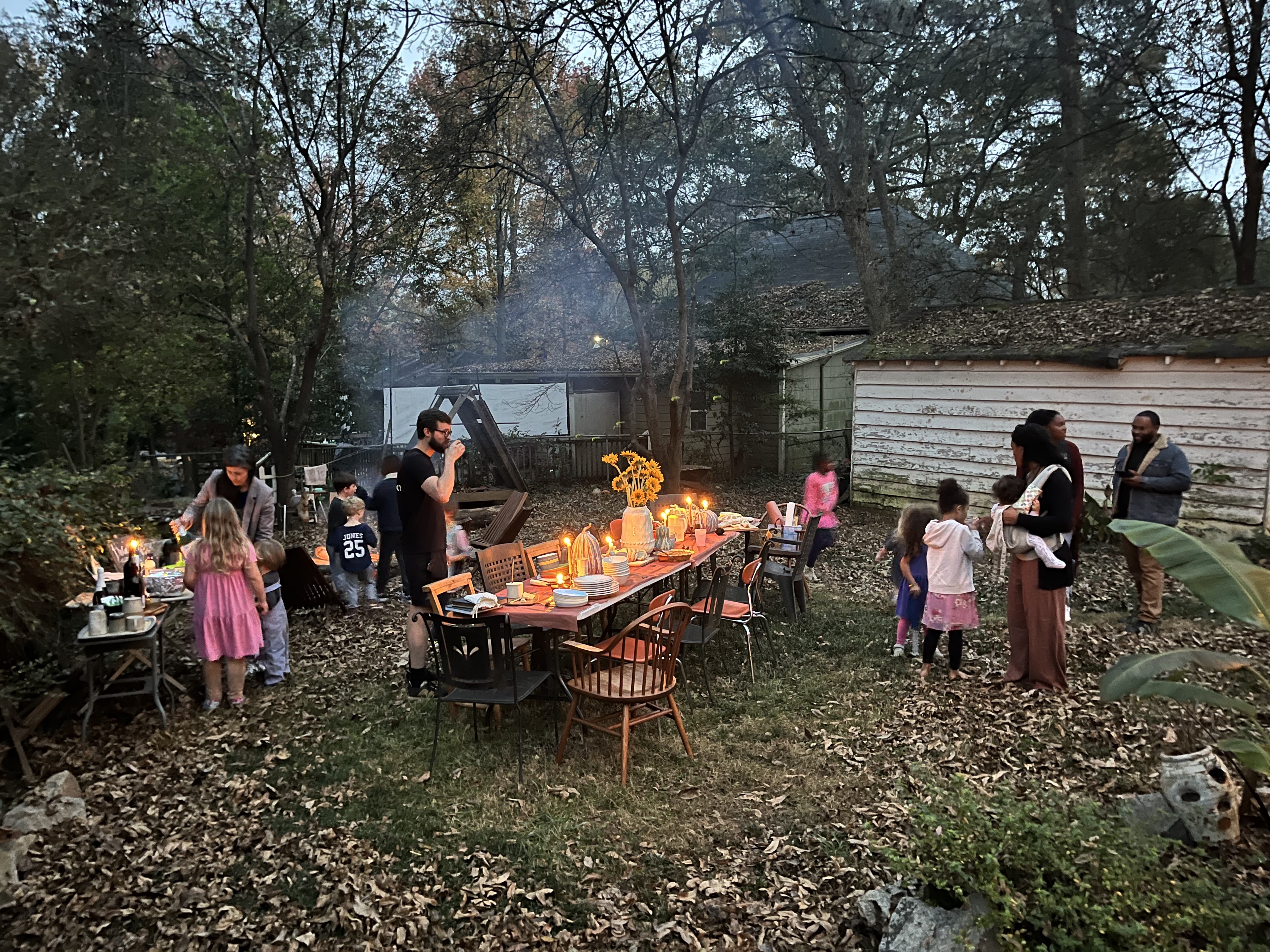
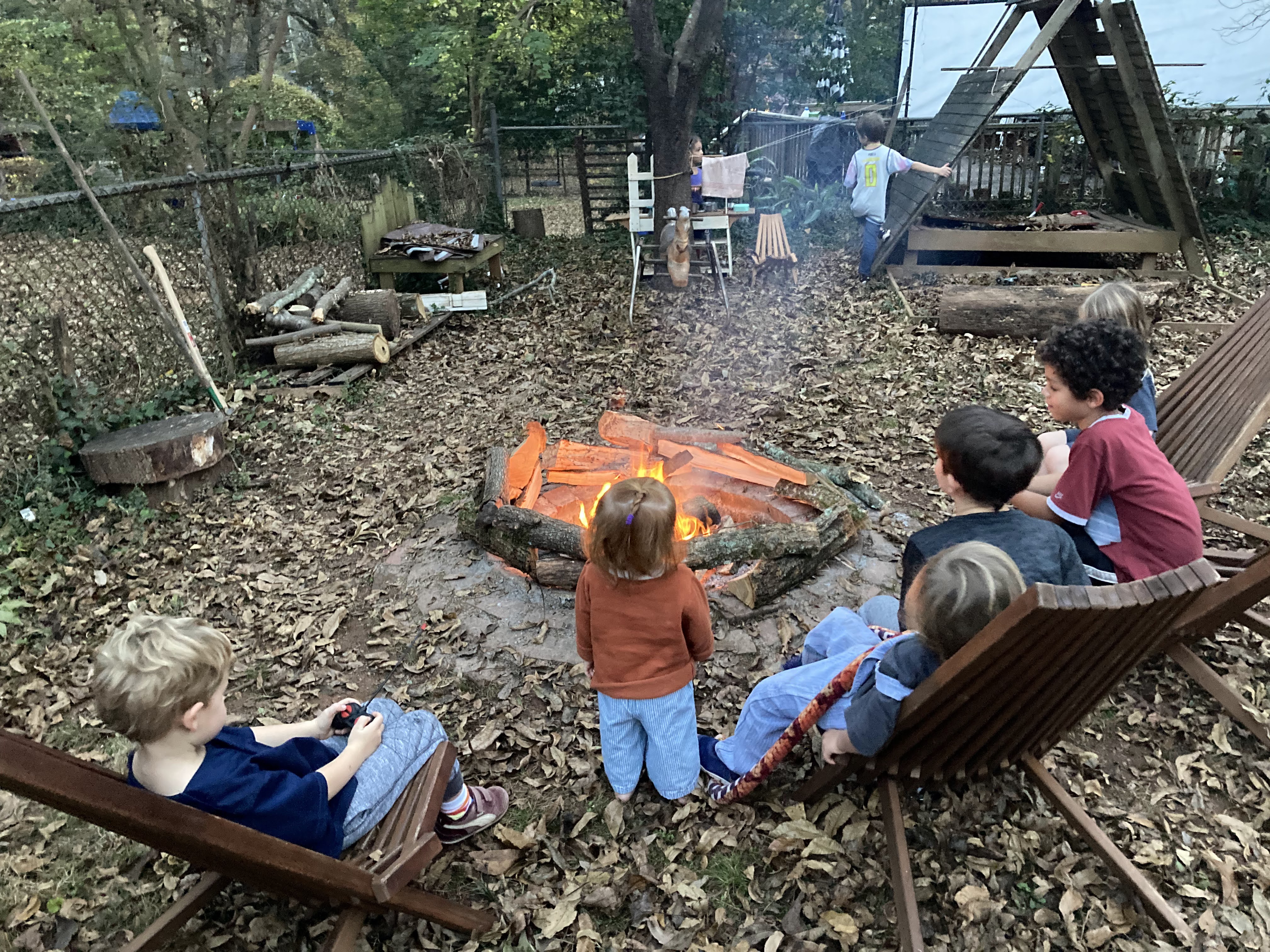
It started raining at 4 pm, the kind that comes sideways slowly like a mist you can ignore but then somehow soaks your jacket and requires windshield wipers. We were expecting company within the hour. I never check the weather. I even told folks earlier in the week– I won’t check the weather, we’ll just pray. Our house is small, sometimes shrinking with our own dinner shenanigans, six pairs of hands and shoulders jostling for storytelling position that often ends in a pair of feet standing on a chair.

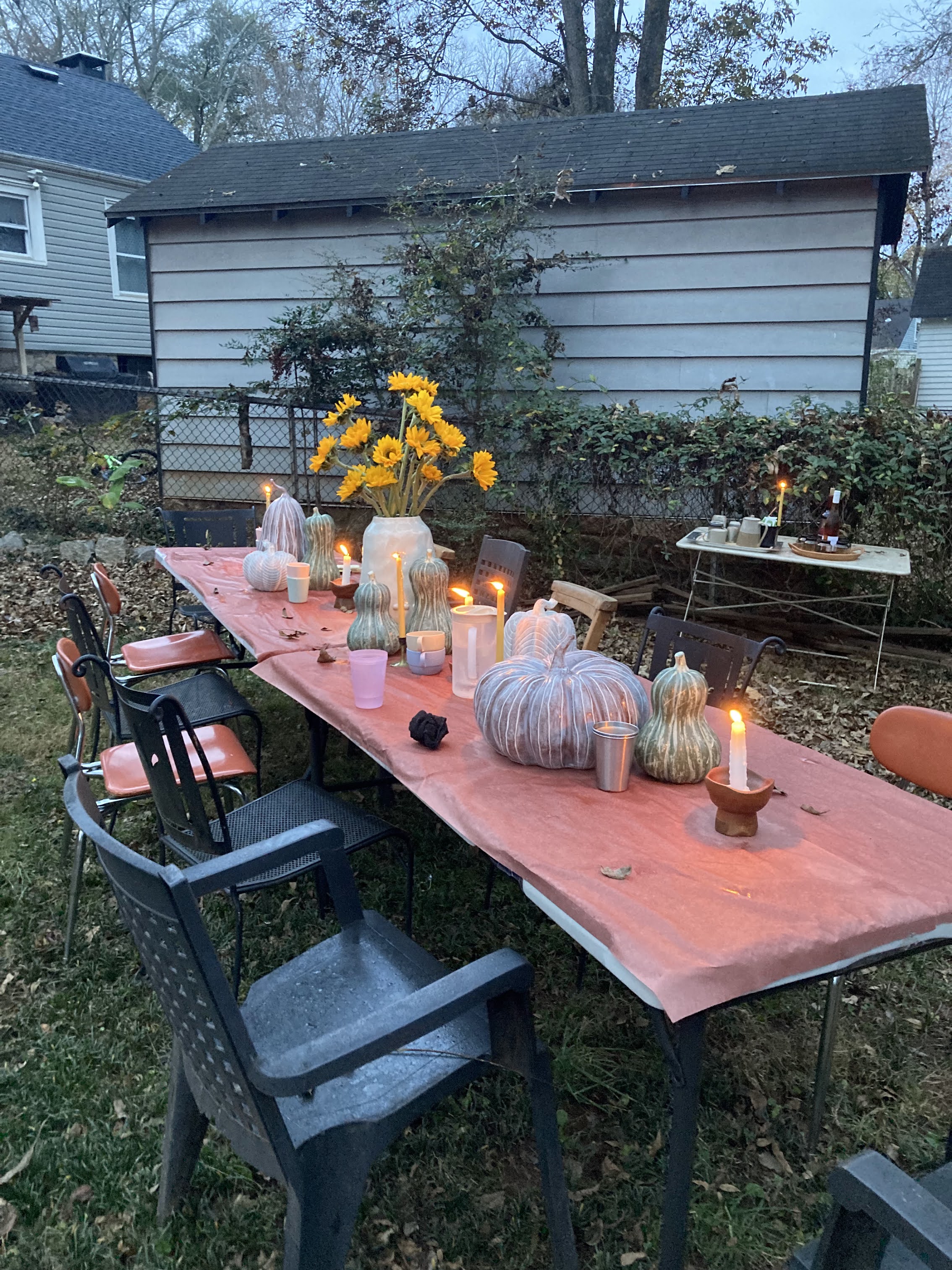
We love our little house. It is warm and safe and insulated from the harshness on the other side of the world. As we prepared our table in the rain, with borrowed decorations and mismatched chairs in candlelight, I thought of the horror lighting up backyards and neighborhoods in Gaza.

French loaves and round loaves baked while the ingredients for squash soup simmered and adjusted to my seasoning whims. I threw ice cubes in the oven, my made-up hack for a water bath, and prayed my haphazard disregard for timing and instructions would still produce something edible. I tripped over the 1 year old and had words with the 8 year old who insisted every art supply was needed for the gifts she was preparing for our guests. The 6 and almost 4 year old were, as per uzh, completely oblivious to the fact of hosting at all. Although, they managed to pop up every 17 minutes to ask, “When is the party starting again?”

The habit of hosting is spiritual warfare. It is perceiving books pushed off the shelves in the movie Interstellar to reveal an entirely different dimension, a time and space of different rules and a kingdom where the right rule is perfectly reflected. Heaven. The picture of God as Host is perhaps my most intimate understanding of my Maker. It’s about the inviting, the preparing, the knowing, the making space… and all of it for the purpose of existing in the same room, in the same moment. That is the reward. That is the joy of the Maker, the delight of the Father. To be with me. To be with us.

Sometimes, in my immaturity, I wonder if I host to better know this truth– to heal the unbelief that He hasn’t actually invited me or won’t actually follow through with the plans for the feast in the land of Zion. There’s always a moment, pre-party, where I wish we get rained out– or that some external factor would relieve the stress and failure of the hosting mayhem. But, then the mist clears, the crowd comes, and the imperfect party feels like the kingdom of heaven. Surprise guests arrive. Kids spill the “kid wine” and refuse indulgent mashed potatoes. The candles are perfect for 15 minutes at dusk and then nearly light hairs on fire before burning down past the candle holder and providing less than ideal light. The night hides the outdoor tables and crunchy pecan leaves land in the potato salad. And it feels like the kingdom.

The habit of hosting is spiritual warfare, but what a miracle of a reality that, if we invite Him, the King of heaven and earth and all creation shows up in all His glory to proclaim the battle is won. Hosting is acting out the belief that the King of heaven has held nothing back in His invitation and as we reflect that likeness, neither should we. It is a battle cry that doesn’t reverberate or echo in the hollow chambers of the interwebs but comes alive inside the hearts of those present.

It got loud, there were tumbles and offenses and hurt feelings and demands for more pumpkin mousse. But, in the middle of it, we made sure to name where we were directing our thanks. We prayed a prayer as we broke the bread that the delight in our tasting of it would pale in comparison to our delight in the sharing of the Bread of Life. We prayed again as we built little ebenezers as a family to remember the way the Lord had been faithful in the past year. The Lord be praised, for He has shown up!

The habit of meeting together is a spiritual act of resistance! We proclaim the Lord’s name as we crucify our desire for perfect behaviors and pinterest tablescapes. We proclaim the Lord’s name as we lift up the sounds of a rowdy game of tag or a very involved play daycare situation that has developed on the deck. We proclaim the Lord’s name as we invite in new friends and friends of those friends. The Lord, the Lion and the lamb, is on the move. There is something about gathering together that reminds us that this spiritual battle is not a local one. The habit of meeting together is also the habit of mobilizing, training, and joining the global resistance led by the servant king of heaven. The boot camp is the kitchen and the art studio and the garden and the tool shed and the writing workshop.

Our habit of meeting in the glow of our little house is a direct response to the horrors happening in the dark world because the kingdom of God is not a local kingdom– not a national kingdom, not a government or a movement. The kingdom of God is a reality that we embrace as we meet together, imperfectly and wherever we are in the world, and desperately seek His face.

Come, Lord Jesus! Heal my unbelief that I’m not invited to your table even as I invite others to ours.

the liturgy of ordinary time

I am keeping track of time, barely. Sweat drops and slices of fruit and sips from iced cold brew. Molasses and moonshine; slow, fast, strong, fragrant.

My fingers tickle the contours of her face. Feather soft eyebrows, a tender dip in the bridge of her nose, a jaw line that hides under squishy cheeks, and her little jut of a chin with a bumpy, brave scar. We started the tickle when she was tiny. Maybe it was one of those long car rides from Iowa to New York when I realized she loved all kinds of soft touch. Then it got bundled up with her night and nap routines and now she makes specific requests. “Tickle my hands, Mama.” 

Most days, I count it a privilege and the tickle is sweet and slow and savored. Every once in a while, I wrestle the inner voices arguing about my being subject to the tickle whims of a two year old as images of ‘real work’ roll through my mind. And then the tickles are rushed and tired and phoned in.

One night, mind drifting to our guests on the other side of the door, I rolled my eyes as my fingers flicked past nose, ears and cheeks hoping for a fast sleepfall. Then, she reached out her pudgy fingers and started her own tracing. “Tickle Mama’s eyebowwwws.” I didn’t know my shoulders were tense until they relaxed completely at her touch. “Tickle Mama’s nooooohs.” I hid my surprise behind the early summer darkness and gloried in the generous mind of my girl. And so, she traced my face and I felt the sweet and savored slowness of a rightly executed tickle. 

She fell asleep eventually. And we are still in Ordinary Time.

Ordinary Time – that long and feastless stretch following Advent and Pentecost on the church calendar where there is nothing to anchor or move us like the drama of the seasons before. I’ve been waking up for more of the ordinary minutes – the slower, silent ticks of the clock before the day feels fast forward.  The sun reaches its bright, Eastern arms through our bedroom window at 5 and 6 am and my mind will not stay tucked in sleep.

C.S. Lewis and Martin Laird meet somewhere in my mind now, as I pick up the remains of coloring projects and a trail of books leading back to a disheveled bottom shelf. That passage from The Weight of Glory muddles into view: 

War makes death real to us, and that would have been regarded as one of its blessings by most of the great Christians of the past. They thought it good for us to be always aware of our mortality. I am inclined to think they were right.
― C.S. Lewis, The Weight of Glory

When I first devoured these pages in college (oof, years ago), I felt lazy and disengaged in my slow moments. I prayed – Lord, please never find me inactive in the serious work of the Christian life. It is somber like war and I don’t want to be a mere civilian.

I wanted death to be real – all the awkward and cold angles of it – because I thought that meant I would do better at living.

Yesterday, I was bad at being alive. I transmorphed after those early, solitary moments of apartment sunshine into a turtle snail, a snurtle… or something that could escape inside itself without explanation. Except that I was in almost constant motion – in my mind and with my hands. I jostled household chores early and made plans for midday, but everything played like a private concert of dischord – all the notes were wrong and only I could hear the sound. 

I guess that was death – the awkward and cold angles of it – keeping me aware of my mortality and making me a human I did not recognize.

Because “aware of my mortality” means sin and demons and a herd of wolves looking like sheep – and all of that buried deep in my chest where the discordant symphony played its miserable song. This is who you are, human – short-tempered, impulsive, ungrateful, cynical, distressed. Living aware of my mortality is the real pits.

I read “A Grief Observed” after my brother died. Yesterday marked three years since that terrible phone call collapsed me on our apartment floor. I crawled inside the broken tenderness of C.S. Lewis’s grieving heart that pushed against death and all its agony for the living. Confused, angered, depleted, desperate, tired… not exactly motivated to greater motion, greater purpose. Just paralyzed by an invisible, writhing pain monster I could sometimes see. 

Your problem is, you don’t know who you are. Let me tell you who you are. You are a ray of God’s own light. You say you seek God, but a ray of light doesn’t seek the sun; it’s coming from the sun. You are a branch on the vine of God. A branch doesn’t seek the vine; it’s already part of the vine. A wave doesn’t look for the ocean; it’s already full of ocean.

Martin Laird, Into the Silent Land

My eyes stung when I woke this morning, evidence of what I couldn’t keep inside yesterday. I am still wearing the shirt that was soaked in snot less than 12 hours ago. We read the morning Psalm together and prayed as directed, “In the depths of our isolation we cry to you, Lord God; give light in our darkness and bring us out of the prison of our despair through Jesus Christ our Lord. Amen.

And this small, crawling motion. This, rhythm of entering the Lord’s presence with my fickle humanity and asking impossible things, is my mortal pace. I am trapped, bound in this body and darkness, but God – completely outside this constraint – shares His glory and shines His light.

Lord, I have called daily upon you; 
I have stretched out my hands to you.
Do you work wonders for the dead?
Will the shades stand up and praise you?
Shall your loving-kindness be declared in the grave,
your faithfulness in the land of destruction?
Shall your wonders be known in the dark
or your righteous deeds in the land where all is forgotten?
 
But as for me, O Lord, I will cry to you;
early in the morning my prayer shall come before you.

I paused and read again Psalm 88 – about wonders and darkness and the forgotten land. I don’t have an exegesis hiding in my head, but I know my heart wonders often if the Light can reach all the dark – even the places I don’t understand, the places language fails and nothing is right. I am tempted to filter the verses with a simpler, safer tone in my reading with Zella. But God’s Word does not allow it. The darkness is too stark to be sweet, ever. And His light is too glorious to be anything less than complete.

My mortality is not going away, but neither is God’s eternity. And He has somehow mysteriously linked the two in the death of His Son. And that somehow mysteriously informs my identity – yesterday in my transmorphed paralysis and today in my Light-infused slow motion. And that all somehow makes sense in His economy.

I most hated that yesterday felt ordinary. I hated that oatmeal still cooked the same and the stroller was still cumbersome and the storm still changed plans. I hated forgetfulness and poorly timed naps and the innocence that was attached at my hip and in my belly. I hated the ordinary-ness so thoroughly I could not think of anything else.

Because death is not ordinary.

But, here we are – positioned still inside those dreadfully unimpressive words – Ordinary Time. Like the stretch of time after a dramatic Pentecost… the clock creeps on and the days stretch without celebration and I am mortal. But, God in His great mercy, reminds me I am His and He has conquered death and dark and despair in the kingdom come. He is Light and His mystery brings the morning sun that dried my puffy eyes in ordinary time.

the habit of meeting together

Winter is not in my marrow this year and I am trying to figure out why it bothers me so. I like a snow that settles fast and deep like a feathery blanket, and then fades without a slush parade. The snow of this winter is just exactly the way I like it and today felt like April. But discomfort better suits the Lenten season; the chill in my marrow is its perfect pair.

O, Lent. Old, steady, dark, and stubborn friend.

This is the season of giving up and taking up and pressing in. I added that – the pressing in. My soul is weary of resolutions and restrictions. I hear Grover saying, “Neeeeeeeear” …….. “Faaaaaaaar,” and this is my Lent dance – searching for the Lord and pressing in, getting near, bending toward, listening.

And meeting.

I joked with some guests recently that we host 10-15 times a week. We laughed because there are seven days and that’s silly… but there are also mornings, noons, and nights. There are coffees and teas and stop bys. There are neighbors and strangers and friends. And there is this little human named Zella Ruth, always bending out of the hold on my hip to see who will open the door next.

She has a shoebox in the kitchen with jar lids, measuring spoons and a hot and sour soup container. She spends a lot of time with that shoebox because I spend a lot of time in the kitchen because Team Kolts is in the habit of meeting together. In the first months of our marriage, we struggled to agree on our definitions of “an open door.” One night, I was angrier than I ever remember being in my entire life – so angry I felt heat puffing out my ears and we called an emergency counseling session with our pastor the next day (silly story about a couch, not even really worth re-telling).

All these … months later, we weekly compare notes to see who we’ve invited over and daily check in about who might be stopping by. *I got a text while writing this and now a friend is staying with us for the weekend. Don’t worry – no hot ears.

Lent is pressing in.

And I am holding fast the confession of my hope without wavering. I’m praying for the unwavering part, actually. But there is something so irreplaceable about meeting together. I remember an exasperated mom at the dentist’s office asked my parents once, “How’d you get your five kids to turn out alright?” And my parents said something like, “It was the Lord… but we did go to church every Sunday.”

It was never about attendance. It was about the habit of meeting together and I think I am starting to feel the best weight of that.

Hebrews 10:24-25, “Let us hold fast the confession of our hope without wavering, for he who promised is faithful. And let us consider how to stir up one another to love and good works, not neglecting to meet together, as is the habit of some, but encouraging one another, and all the more as you see the Day drawing near.”

I need this preached to me – I need to hear this good news that there is hope, the good news that God is faithful. And I need to preach the same.

Our pastor spoke recently about salvaging the word “preaching.” He said that we need to both hear and speak true words to each other, the good news that God says we matter and that what we do matters. We need to hear and speak the true words that the pain and hurt of this world needs to be reckoned with and has been already in the person of Jesus.

Sometimes I preach to Zella. Nose to nose, I sing into closed eyes and (sometimes) her open mouth wail, “…I’ll be satisfied as long, as I walk let me walk close to Thee.” If she can’t hear the good news in it, I do. “Thro’ this world of toil and snares, If I falter, Lord, who cares? Who with me my burden shares? None but Thee, dear Lord, none but Thee.”

After Will died, I needed preaching. I needed true words, simple words of hope and peace and kingdom come. I needed Jesus more and above anything else.

Lent is pressing in and I need the habit of meeting together to keep happening in my living room. I need friends who come looking for prayer and neighbors who accept invitations to dinner. I need conversations in kitchens and I need walks in the park. I need to be pressed farther up and further in, where the preaching is desperate because the siren song is too strong to stop.

Her eyelashes are like branches now, shading those sweet cheeks from winter skies gray. We ventured out on Ash Wednesday and Zella Ruth made irreverent babbles throughout the somber liturgy. She didn’t know Lent was pressing in, but I hope she felt something of the ash on her head and the silent exit from the meeting together.

I can’t seem to shake this Ash Wednesday prayer and especially that this liturgy assumes a gathering.

The Collect for Ash Wednesday

Almighty and everlasting God, you hate nothing you have made and forgive the sins of all who are penitent: Create and make in us new and contrite hearts, that we, worthily lamenting our sins and acknowledging our wretchedness, may obtain of you, the God of all mercy, perfect remission and forgiveness; through Jesus Christ our Lord, who lives and reigns with you and the Holy Spirit, one God, for ever and ever. Amen

in the midst of my escaping

I’ve been listening to this song by Young Oceans, called The Gates. It makes me uncomfortable because in the middle, if I sing all the words, I am a liar. The music sounds more confident than I feel, but the words betray a heart that feels so many other things.

I wanna wake and feel Your glory
I wanna speak in tongues of angels for You Lord
I wanna sing a song eternal
I wanna trample on the curses of the earth
I wanna call upon Your healing
I wanna see the sick and weary be made new
I wanna swim inside the blessings
I wanna swim inside the blessings of the Lord

It’s all the things I want to want, but I’m too weak or frail or scared or lazy or tired or selfish. Or I am all those things.

The beauty of Christmas – Christ coming to earth – came wrapped inside wrapping inside wrapping inside wrapping this year. It came slow like the full nine months of labor pains, much deeper than I’ve ever anticipated this season before.

And when I shake with sobs in bed or pray for water hotter than my tears in the shower, I need Emmanuel. I need the truth of “God with us” on earth. When I wish I was 13 years old again or when I go to sleep to be hidden, I need Emmanuel.

I’m not proud of wanting to escape. But when life is hard, you just dream of it being easier I guess. Easier commute to work, easier free time, easier time management, easier professional life, easier marriage, easier living, easier. Not lazy, just better. I’m not proud of wanting easier.

Maybe that’s why I love liturgy so much. It makes me say the words I do not feel. And that’s why Scripture memory is a life vest these days. Even if those are the only words I repeat, the only ones I sing… even if I don’t feel them completely, I know there is a gift wrapped inside a gift wrapped inside a gift that is more inside than any thief of joy.

God with us. He is here, even when I am not wanting Him. He is here, when I want to be elsewhere. God with us, pursuing us in love.

Did You say, ‘seek, you will surely find’?
I am searching, Lord turn Your eyes to mine
But I’m weary, pacing at these gates
Jesus come, come now, don’t delay

Like a child, ever faithful may I be
This I ask, God of mercy hear my plea
I have wandered with a soul impure
For this scorn, Father, send a cure

Last week, I memorized from John 11:25-26, “I am the resurrection and the life. Whoever believes in me, though he die, yet shall he live, and everyone who lives and believes in me shall never die…”

It’s one of those verses that’s hard to say, but I stumble through. I speak and trust God will grant the belief I need to be moved by these words. He is good and true and He is holding me up in the midst of my escaping.


Find all the writings on grief at this link and join with us as we mourn in hope.

joy, the rhythm of God’s metronome

It is raining today – a thick, damp autumn drizzle that will try to keep the city folks from the farmer’s markets. Rain is settling the dust in the city and calming the rush of a long work week. We are all underneath the weight of it, all the living of us.

I am still alive today and the smell of thyme is filling my senses in our favorite neighborhood coffeeshop. I’m writing in the corner while a cozy crowd brunches Saturday morning into the afternoon. This is the rhythm of the weekend. We work all week so that we can wake up late for lazy brunch on a rainy Saturday. It’s a rhythm we wrote for ourselves and a rhythm we are resigned to keep like a metronome. Morning, work, night, sleep, busy, work, busy, weekend, play, rest, weekend. Repeat.

Consciously or subconsciously Christians have accepted the whole ethos of our joyless and business-minded culture. They believe that the only way to be taken “seriously” by the “serious” – that is, by modern man – is to be serious, and, therefore, to reduce to a symbolic “minimum” what in the past was so tremendously central in the life of the Church – the joy of the feast. – Alexander Schmemann, For the Life of the World (1963)

I really “get” what Alexander Schmemann is saying. Today is about the business-minded, serious, modern man with five and ten year plans. Weekends and scheduled holidays are available for joy and for feasting, unless you have stored up vacation time for something in between. Schmemann wrote “For the Life of the World,” in 1963 as a study guide for the National Student Christian Federation Conference in Athens, Ohio – several decades and states removed from my hipster life in Brooklyn in 2014. But, today is still about that same rhythm. I am resigned to the groove of that same calendar that tells us when to work, when to holiday, when to rest, and when to feast. I usually try to stand by the window…

In the weekday mornings, I join the coffee-perked rush on the Q train over the Manhattan Bridge.

In the weekday evenings, I join the long-faced rush on the Q train back over the same bridge in the opposite direction.

Schmemann’s book is about liturgy and the church calendar, but reading these chapters has felt a little like lighting a match. God keeps rhythm like a metronome. We hear it in the words at the close of the first day of Creation, “And there was evening and there was morning, the first day.” (Genesis 1). It keeps repeating, “There was evening and there was morning, the second day.” The third, fourth, fifth, sixth, and seventh follow with that same rhythm. There was evening and there was morning, like a metronome.

The Israelites were all about God’s metronome. They ordered their lives around celebrations that anticipated the coming of the promised Messiah. People traveled from all over – long, dusty, and dangerous travels – so that they could dip into the barrels of celebration wine and break the bread of provision around long tables of neighbors, strangers, and friends. They didn’t always do it right, sure. But it seems like everyone agreed that gathering was important. And not just gathering, but gathering to anticipate the promises of God – to remind one another of the ways He provided in the past and to point toward His provision in the future.

We gather to celebrate birthdays and holidays and those days that come standard, pre-typed on our calendars. But in these, often (maybe), we let our joy get contained inside the event. Thanksgiving is coming. We will anticipate the meal, the guests, the full bellies in the afternoon. We anticipate joy on that day of gathering, but it will pass. Work will find us again on Friday or Monday at 9 am and we will slide into the same rhythm.

Schmemann writes, “The modern world has relegated joy to the category of “fun” and “relaxation.” It is justified and permissible on our “time off”; it is a concession, a compromise. And Christians have come to believe all this, or rather they have ceased to believe that the feast, the joy have something to do precisely with the “serious problems” of life itself, may even be the Christian answer to them.”

Yes, Schmemann, I believe it is. Joy is the Christian answer to the “serious problems” of life itself. But it can’t be faked or smashed into a day that looks in on itself. Joy cannot get celebrated when it is about a birthday or about a national holiday or about vacation time. Joy is the answer to the serious problems of life because it is always looking to Christ – back to the work of the cross that looks forward to our hope of eternity. Joy is our anticipation of what we taste but cannot grasp on this side of heaven.

Joy is the rhythm of God’s metronome.

I am in the middle of these thoughts about joy and feasting. They are not finished but they begged to be written out when they still felt awkward and gangly. This past month, in the middle of a very “serious problem of life” God offered a unique grace that allowed me to step into the joy of two different weddings. Feasting is hard to do when you are mourning. Joy is hard to do when you are sad. Dancing is hard to do when you are weeping. Strong is hard to do when you are weak. It almost feels wrong to smile, to dance, to laugh, to sing, to joy. It almost feels dishonest and disrespectful to be anything but depressed. Death is a serious problem of life.

But, these two weddings were feasts of joy that looked back on God’s provision in Christ and forward to the promises of abundance here and in eternity. I didn’t know what to do as joy wrestled the sorrow and everything got tangled. I didn’t know how to do either one well.

But joy is the rhythm of God’s metronome.

Joy swallows up sorrow, in the end. Right now, they wrestle it out in my heart – fighting for thoughts and emotions and words. But, in the end joy swallows up sorrow and that is what feasting and gathering is all about, this rhythm with a different beat.

Thanks for your patience in reading these very unfinished thoughts, friends. Is it okay that they don’t make sense? That they mix metaphors and jump around like a scatterplot graph?