misplaced humility

Maybe we just have things turned around (wouldn’t be the first time for the human race). Maybe we’ve shelved things in the wrong place and now it’s hard to find what we’re looking for.
Maybe it’s like when you are making a recipe and you know you bought cumin, but you’ve torn apart the whole kitchen and still can’t find it. Then… after admitting defeat and cranking a can of Progresso soup open in disgust, you see little Tommy flying a plane around the kitchen with little cumin as its pilot.

Maybe that’s what we’ve done with humility.

“What we suffer from today is humility in the wrong place. Modesty has moved from the organ of ambition. Modesty has settled upon the organ of conviction; where it was never meant to be.
A man was meant to be doubtful about himself, but undoubting about the truth; this has been exactly reversed.

Nowadays the part of a man that a man does assert is exactly the part he ought not to assert–himself. The part he doubts is exactly the part he ought not to doubt – the Divine Reason. . . .

The new skeptic is so humble that he doubts if he can even learn. . . . There is a real humility typical of our time; but it so happens that it’s practically a more poisonous humility than the wildest prostrations of the ascetic. . . .

The old humility made a man doubtful about his efforts, which might make him work harder. But the new humility makes a man doubtful about his aims, which makes him stop working altogether. . . .

We are on the road to producing a race of man too mentally modest to believe in the multiplication table.”

G.K. ChestertonOrthodoxy [Garden City, NY: Doubleday and Co., 1957], pp. 31-32

Powerful insight once again from G.K.

Gilbert Keith Chesterton, (b. 29 May 1874 – d....

Oh, Arthur Conan Doyle

I can’t say that Sherlock Holmes has ever held any sort of intrigue for me, in any literary sense. Those random lines people always utter from his books are long-since cliché, although his typical wardrobe and disposition are endearing.

When my roommate came home from Parent/Teacher conferences with a grocery bag full of paperbacks, I dug right in and Arthur Conan Doyle is what I found. Apparently, this parent buys books to read as she travels and she wanted to pass them along. I thought, “Why not give ole Sherlock a try?”

The stories are short and interesting… usually a good thing to fall asleep to (because if I’m deep in a page-turner I don’t go to sleep at all!). It’s been fun. I thoroughly recommend it.

As I leisurely (ill-advised with a severely long list of ‘to-dos,’ but therapeutic all the same!), finished the Sherlock Holmes adventures this afternoon, I was jamming to Sarah Siskind, Fionn Regan, Kyle Andrews, Waterdeep, and M. Ward.

Here’s to another manic Monday! 🙂

delightful surprise

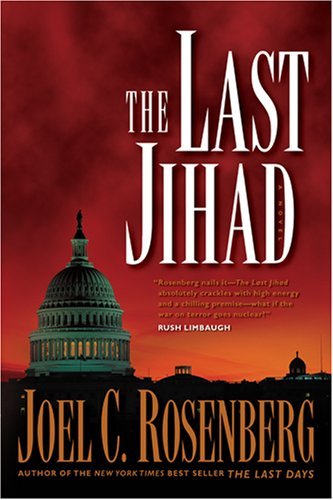
I walked into my office after a break yesterday and found a plastic package sitting on top of scattered papers, ungraded quizzes, and cold tea. It was addressed to me, so I ripped it open to find these two gems of books by Joel Rosenberg.

They were sent directly from the distributor, so I’m not sure who my secret saint is, but I am superbly glad to have fiction I can jump into. What a delight this week will be! I was just talking with two good friends/mentors from my home state not too long ago about how they were starting their own little book club with his books and I envied a bit the idea of coffee and conversation over some challenging fiction. I can’t wait to catch up with them!

Secret Life of Bees

Last week, amidst almost constant power outages, I was searching for a good novel to drink in with my endless cups of tea and decaf coffee. My roommate lent me, “The Secret Life of Bees” by Sue Monk Kidd and within pages I was hooked.

I fell abruptly into the room of an awkward adolescent who was dealing with trauma too great for her tender spirit and just kept turning pages. I met the brokenness with a dull ache for all things wrong in the world. The loud, bold anthem of “justice rolls down like a mighty water” fought against the things little Lily faced in her family, culture, and within herself.

But, as much as I resonated with the brokenness seeping off the pages, I couldn’t help but hurt most for the proposed solution, a confused picture of religion.

Now, I finished the book in three short electricity-absent days, so you must understand that I do appreciate the cleverness with which it was written. Every time I turned the page, I seemed to rub shoulders with one of the characters and resonate with their search for meaning and most importantly, hope.

Lily, the main character, is forced to look beyond her circumstances, prejudice, tradition, and her own fears to find something that’s worth living for. She ends up in a delightful, loving, bright pink home outside small-town Tiburon, South Carolina. From the remnants of her little, broken life, we see a splendid new girl emerge.

I struggle, though, because in the end I see Lily just as lost as in the beginning. She has found a place where she feels loved, wanted, and treasured. But, I can’t say that she has truly found hope… a hope that does not disappoint. She ends up putting her trust and faith in this idea of virgin Mary – seeing her in everything and believing she protects and guides. But, I know that no one – not one person – is found to be without sin, even Mary. And to put our hope in a human will certainly lead to disappointment.

This post is shorter than my true thoughts on the subject, but I have a funny feeling that the more I write the less sense I will make. So, I invite your thoughts – for those who have/have not read this book. What do you think of the message woven throughout the pages?

What I’m reading …

Well, amidst first quarter grades and many students’ persistent pining for extra credit, I’ve been trying to read for relaxation.

Currently, here’s what’s on my nightstand:

After a glorious first Dostoevsky experience (with the Idiot) I picked up his famed book “Brothers Karamazov” with big expectations. Somewhere in the middle, in one of the endless dialogues involving the feuding brothers, I got lost in the philosophical argument against the existence of God. I’m still very much intent on finishing, but in the meantime, I picked up a rather lighter choice from the school library.

I absolutely loved Robinson Crusoe. So much so that I would say it would easily be on a top 10 list. On a whim one weekend when I was home from college, I rummaged my mom’s old books and found Robinson Crusoe among the treasured classics. So, after that first great experience, I also had high expectations for this short novel. I’ve followed David Balfour from his home in the Lowlands of Scotland to some island off the coast of England where he is now hiding with the likes of some strange character in order to escape an army of redcoats (in pursuit because David is believed to have conspired on a murder). Interesting and light.

I continue to be inspired, encouraged, and challenged by the story of these China Inland Mission missionaries who are pressing in to the Lord to find His will and way in the midst of a very confusing assignment. Kuhn’s practical approach is refreshing to my own obsession with extravagant language.

Well, that’s it for tonight. I just got back from a rousing game of soccer (definitely still learning!) and about to call it a night.

a book; an escape

When friends told me I should bring reading material to Honduras, my reaction was, “yes, of course, but I’m sure I won’t have time to do much reading.” Wrong.

Some of my favorite times in solitude here have been with good books. Now, in the middle of “The Brothers Karamazov,” I’m already looking for something a little more uplifting. And, just as I’m thinking this, I get emails from two very respected women in my life who are doing some reading of their own. Joel Rosenberg is on their list of authors.

After I scanned his website, I too am intrigued. If US News and World Report, CNN Headline News, New York Daily News, and Rush Limbaugh all endorse him, I figure his books are worth a shot.

The hard part may be finding him in Honduras. But, either way, I’m recommending you take a peek!

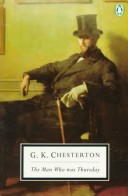
The Man Who Was Thursday

I fell asleep last night reading Chesterton’s book, so I thought I would better know how to articulate my thoughts on it. Not the case. So, my apologies for what seems slightly haphazard. And… I just happen to be horrible at summaries.

Let me just lay out the general idea: Syme, a pronounced poet and intellectual stumbles upon a very uncommon looking policeman in England. Upon questioning, the policeman reveals that he’s no ‘ordinary’ cop, but actually part of the elite undercover force whose quest is to root out the spreading evil of anarchy. Syme’s interest peaks when the cop in question suggests he would be perfect for the squad. So, Syme ends up in a pitch black room with a voice confirming his qualifications to fight evil, though he had no prior training.

Syme happens upon a radical anarchist, whose poetry had captivated an audience on the outskirts of town. And the strange, twisting, unpredictable journey begins. In dreamlike sequence, we follow Syme into the most unlikely of situations as he tries to uncover the destructive plans of the anarchy underground.

I’ve been reading different reviews, and of course the heavy annotations, but I think it will take me the whole book to understand Syme’s journey. Why do the ‘bad’ guys keep being unveiled as ‘good’ guys in disguise? Are all the anarchists actually good guys undercover?

That would be a statement. I guess it’s kind of like being ‘of’ the world to fight the evil of the world, but in the effort you are self-defeating. Like I said, I’m a bad summarizer. I’m an even worse philosopher without a good bit of processing time.

So, I’m just asking: Has anyone else read this marvel, called a nightmare by Chesterton? I know it doesn’t sound like it from my review, but I’ve completely enjoyed it. I’m actually about 100 pages from finishing.

No plot spoilers, but leave your comments!

Books and Rainy Days

Not to steal any thunder from Christina… I am waiting with anticipation to see what this mysterious graphic might represent… (just kidding I already know – you don’t think she’d make me wait with the rest of you, do you?)

In the meantime, I’ll give you something good to chew on: literature. I know you might prefer chocolate or tres leches cake or (insert scrumptious saturday afternoon treat). But today the treat are the two books I’m reading: The Man Who Was Thursday and The No. 1 Ladies’ Detective Agency. In the past, I’ve referred to my love for books like some people’s love for chocolate, except I’m completely convinced it’s much healthier (I’ve tried the chocolate thing many times).

Anyway, back to the present. These two books I’m eating (I mean reading. I literally just wrote that without thinking!!!) are so very different. The former is written by G.K. Chesterton and it follows a man in his nightmare of fighting anarchy while an undercover anarchist. The latter is about a clever African woman who set up the first (and probably only) ladies’ detective agency in Botswana after her father passed away and left over 200 head of cattle as her inheritance.

I picked up the detective book because my counterpart at the school brought two books along to read while we waited for parents at Open House this past Friday. I gratefully jumped into the fiction and will probably finish tonight or tomorrow. The book is part of a series I’ve heard recommended often, so maybe I’ll get into that.

Chesterton’s book, well, it’s severely deep. I somehow picked up the annotated version, which makes it both interesting and annoying (do I really need to find out – when Ludgate Hill is mentioned – that someone edited his periodical at an office there?). In any case, I think I’m getting a much more distinct landscape than I would otherwise. I’m trying to piece together underlying theological meanings along the way and I’m glad to discover in the annotations that others are equally confused.

I am half-way through each book, grateful for days like this one where the rain drowns out the music and leaves me with the words.

Mmm. Delicious!

"The Shack" built on shoddy foundation, according to Challies

Heard about all the hype about the best-selling book- The Shack?

Proceed with caution, my friends.

Check out our new guide to discerning reading on the right, courtesy Tim Challies. After reading this article about The Shack, I was more than motivated to be discerning in my reading. Tim Challies has an amazing website, Discerning Reader, with book reviews and resources, if you want to check it out.

Libraries are like Toys

My all-time aesthetic dream is this:

I’m sitting in a worn leather chair, holding a well-read copy of Treasure Island, in a quiet, lively room. The lingering smells of old pages, coffee, and a hint of cigar smoke rest on the outdated chairs, sofas, and end tables. Books of all thickness are scattered about, some in piles and others attempt neat arrangements on shelves that cover most of the wall space. Where there are no books, I admire the paintings and illustrations of names I both recognize and can not pronounce. I read the room like a map and always find places yet undiscovered. Conversations drift in and out as my industrious friends flip pages and consult encyclopedias. There is a calm frenzy to consume the limitless literary delicacies.

Dreaming? Most certainly. And, enter my frustration with the way things are.

I recently found myself in the middle of a delightful conversation with a friend about her hopes to become a writer, when I realized something.

It was advice C.S. Lewis gave about writing. He said something like, ‘In order to be a good writer, you must be a good reader.’ You must read good writing, in order to recognize good writing. Of course this makes mountains of sense, but less than molehills are made of this philosophy.

See, I don’t think very many people would disagree with Lewis. I think we are really good at talking about the importance of brilliant literature and dreadful at follow-through. Case in point: libraries.

Right now, I’m a boarder in a city suburb, so I’ve toured many new homes. It seems that the trend is to have an office/library somewhere in the front of the house. This gives the house a sophisticated and important air (nevermind the television shrine above the fireplace in the living room) that communicates status, knowledge, and an arrival of sorts.

What I find so interesting (and I see the same tendency in myself) is that these spaces are so rarely used! We collect the titles like Moby Dick and Pride and Prejudice, arrange them artistically, and there the story ends. We move on to more exciting ways to develop our intellect through “Dancing with the Stars” and “Iron Man” and “Grand Theft: Auto.”

It’s as though we’ve finally collected every beanie baby and now it’s time to move to the next trend – webkins anyone? Everyone (sometimes ashamedly) has the color-coded bins full of toys with no functionality or value except as an antiquated status statement. So, why treat the brilliance of literature like outdated toys?

Because we are still children. We are still attracted to what glitters and distracted by what makes the loudest noise.

My sad confession is that I make decisions opposite my aesthetic dream every day. I consciously decide the mind-numbing activity over the engaging. I also realize my dream is a romantic notion, but I know there are others who respond to the brilliance of fiction and the Truth hidden in history.

I just hope libraries – in their genuine function – never go out of style, because what is found there is far more valuable than trendy toys.