Author: Caroline
When I'm not riding in the backseat of my Grandpa's restored vintage car "Mable," I'm doing other things like...
rising to most adventure occasions my husband proposes /
chasing our toddler around Brooklyn /
enjoying neighbors, strangers, and friends /
making countless trips to the laundromat /
writing for various publications and for personal reflection /
loving and serving our local church /
cleaning the bathroom /
hosting small and big crowds in our home /
meeting up with a friend for coffee /
thinking
Vocation is my strange frenemy. Though I have worked and existed in many stations/places, I am convinced that each day has good work to be done and that I am equipped and prepared to do that good work.
This blog explores the tension and the intersection of a constant vocational call - to good work, neighbor love, and living in the kingdom come.
My favorite things are coffee and creating and laughing (preferably with company). I love to listen to sermons and read biographies and make tea before going to bed.
restlessness
I wrote this poem in response to the previous realization and also as I trudge through the muddy waters of decision-making for the next phase of my life.
————————————–
restlessness tingles
spreads out from within;
desperate anticipation,
impatient to begin
the less-traveled-trail keeps secret,
stories hidden mark the way;
eyes jump from each attraction,
distracted feet tread astray
unshakable conviction
pleases the listening ear;
whitewashed foolishness
turns honey-shed tears
escape, come quickly!
to rescue this mite
overwhelmed, the longing
for wings of flight
sunlight bursts and shadows fall
darkness exposed these haphazard walls
painful discovery, a helpless wretch
pleading now mercy’s net to catch
restlessness tingles,
but what is a sign?
let me not be unsure
that the True object is Thine

true sounds allowed voice
I did a lot of journaling while I was away. You know, the paper and pen kind? Though it seems archaic, there is something you can’t find while pressing detached keys and staring at a computer screen. I wrote pages (and you will be glad for only a summary), but I wrote as I sat, a small solitary figure in a vast landscape, “I feel as though I am in a vacuum – where the world’s noise is shut out and true sounds are allowed voice.”
That seemed to be my own introspective experience as well, away from the bustling sounds, clutter, and routine.
I spent much time “being.” I cannot find other words to describe the stillness – physical and spiritual. I had no place to be, no schedule, no expectation of time. There was only the choice of how to live those moments. I thought. I read. I journaled. I prayed.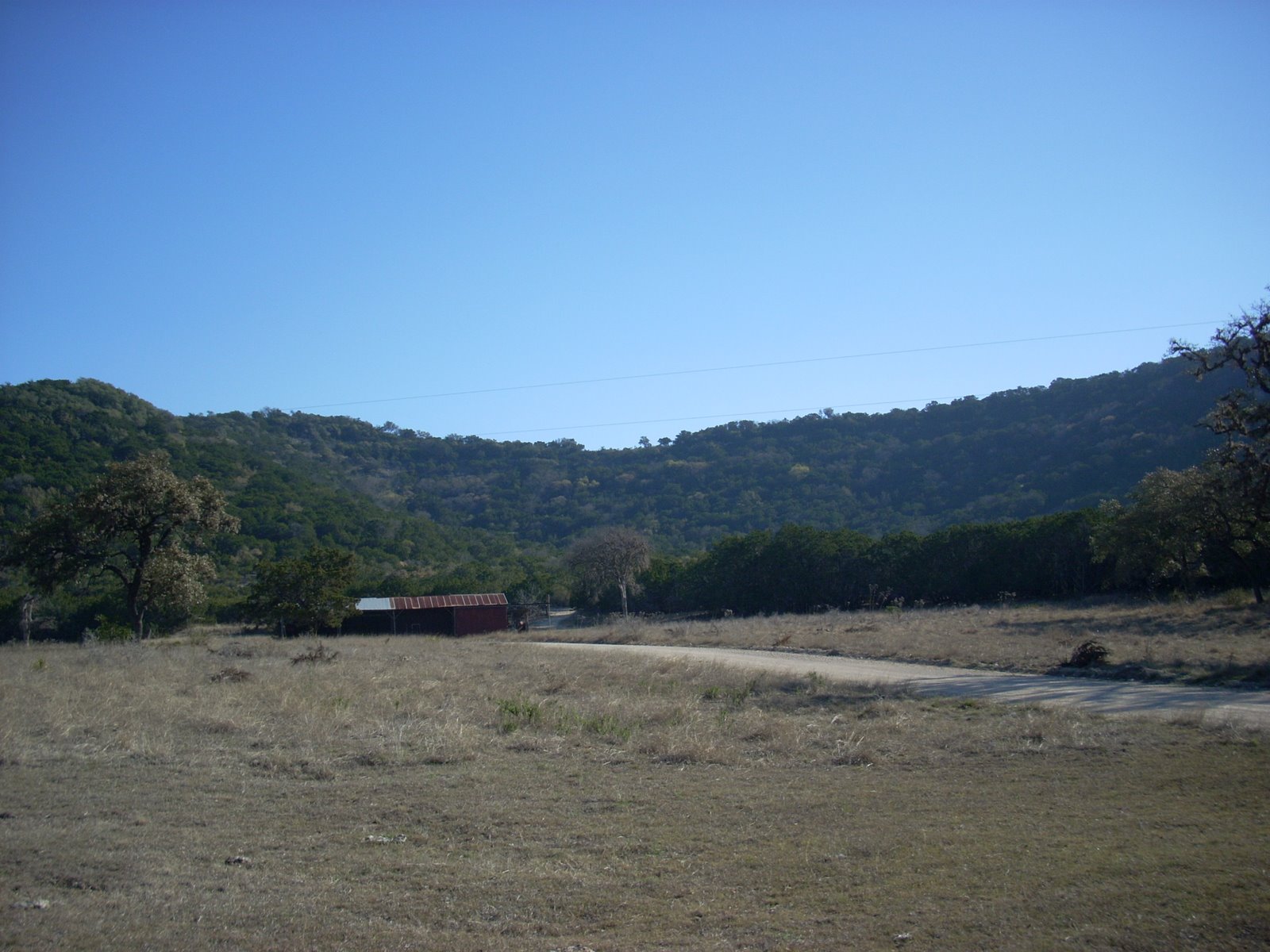


Something rose to the surface in the quiet of my heart, serenaded by winds and birds… Something I had read in C.S. Lewis’ book “Surprised by Joy.”
For brief moments in his life, Lewis experienced this other-worldly thing well up within him. I say thing because we can hardly describe it as happiness or a rush of feeling or any sort of emotion, but I suppose it was really all those things coming together in kind of a combustion of creation. Something inside of him recognized and responded to creation in a way that was intensely thrilling. He remembers a few moments as a child, one as he gazed at the English landscape and another when his brother brought inside leaves and plants to create the setting for their fantasy land.
Later in life he realizes (eloquently, of course) he highly desired this thing, this intense thrill. He tries and fails to capture the thing by re-creating moments similar to those he experienced as a child. Lewis purposed to rush after the thing. He made up his mind to find and capture what had made such an impression. Yet, when he was just close enough, the thing escaped, smothering true delight with disappointment.
Then, the surprise comes just as a dawn breaks the line on the horizon.
This thing (or anything for that matter) is impossible in strategy to attain. It’s absolutely elusive to method and unresponsive to determination. You see, the object must be Divine; the object must be Christ. The intense thrill, the deep response in one’s inmost being is merely peripheral. In light of the greater glory, we may not even stop to revel in the reflections we find here on earth.
weekend respite
I’m off to a remote cabin today. On a little dirt road near a little town in Texas… and I couldn’t be more excited. Well, if not for my sore muscles and sleep-deprivation, I could probably show a little more enthusiasm. I am excited, though, because a road trip means precious thinking time. I can’t bury myself in a book or get distracted by something on a to-do list… road trips have a way of keeping one still.
Since this cabin is tucked into a valley of the west Texas hill country, I won’t be writing on a computer or talking on the phone. But, I hope to venture off like my friends Thoreau and Emerson… where I will purpose to be intentional about my thinking and determined about my reflection. I can always anticipate meeting God when I leave the distractions of this world. I’m sure this will be no different.
Prince Myshkin
Lately, I’ve been falling asleep in the cities of Petersburg and Moscow. I’ve been dreaming of princes and inheritances and wealthy families and love’s irony. All this because I’m in the middle of Fyodor Dostoevsky’s famous work, “The Idiot.”

This prince, dubbed the idiot in the first pages, has officially stolen my heart. What a character he is! Social mores have no consequence and certainly no hold, though I am at times perplexed by the flush in his cheeks. He is a man without presumption.
I cannot follow in this bold claim. I see how alltogether presumptuous I am. Ironical that though I am fully aware of this tendency, I still live with a certain snobbish air. How ridiculous it sounds even as I say it! But, it is sadly all too true.
I am on page 181 and the adventure could not be long enough for me. Have you ever absorbed some form of art and desired so intensely to understand it completely that you rush to finish? I’ll try to explain. Whenever I read a C.S. Lewis novel or listen to one of my favorite Nickel Creek songs, I am impatient for it to finish so that it can be known – part of my life repertoire. It’s like eating a delicacy, so good that you stuff your mouth, only to find that it’s over too soon and you now have indigestion. I suppose it’s as hard to articulate as it is for me to explain.
I just know that my desire for art, philosophy, and literature seems at times to jump from book to book, page to page in a kind of ADD rhythm. I can hardly focus on the fascinating work in front of me, but upon finishing all I really want to do is go back and absorb it all over again.
If literature were chocolate, I would always have a sweet, sticky face and a tummy-ache. I shall try my best to enjoy Prince Myshkin to the most while I have him.
just a wednesday
Today, a Wednesday, is no special event.
Though it is Spring Break, the Office of Student Life persists tirelessly in preparation of the post-break wave of involvement. Several weeks ago, I was strangely (if not typically) ambitious and decided to design and implement a new set of service projects for Spring Break. I was thinking it could be the other Spring Break alternative, you know? So many people take flight for this short week, impatient to forget the local roots in a search for sun, adventure, and the infamous road trip.
So, three themes emerged: environment conservation, housing equality, and homelessness. Yesterday was environment… and we made the short trek to the nearby nature preserve to prepare the way for a natural spring to gurgle up from underground. We were quite a mess by day’s end, but there is something purely human about working with hands (by design, I’m sure).
So today, a Wednesday, was spent at the single resident occupancy housing development… learning about affordable housing and placing toiletries, irons, ironing boards, and alarm clocks into the rooms.
Tomorrow will be spent serving breakfast to the homeless at 13th and Lavaca, then back to campus to make homeless care packages for those panhandlers on Ben White, IH-35, and at that dreadful triangle by Mopac.
There’s really nothing magical about it. It’s just doing what needs doing. I guess it’s strange then, this need to explain. It’s less an addition to life and more the stuff of it.
My grandparents went to a revival last night. And I think that’s the stuff of life, too. I wonder why we think they are exceptions. Service and revival, could that be indeed what it is all about?
curves and straight lines
curves and straight lines
formed thousand times
walk and not run to
a space of freedom
shattered glass houses
reflect the true amount is
really far less than
we believed
up and down eyes
judge and despise
the way the lines
form to make
before this was Another
before we failed each other
whose hands dug deep
the soil to form
the curves and straight lines
been told thousand times
I praise You
again for this freedom
discovering thankful
So, back in November I thought the Lord was teaching me lessons about dependence. When I caused a collision at a busy intersection (after multiple car breakdowns), I was overwhelmed with disaster. I called it a “season” and walked around with humbled, hunched shoulders diligently learning my lessons.
I did learn, too. I learned that the Lord is faithful. I learned that dependence is crucial. I learned that the Lord gives mercy and grace. I learned that the Body of Christ is built to support one another.
I took a deep breath after Thanksgiving in Iowa, with car keys in hand and 17 hours between me and my next attempt at Austin, Texas. The Lord’s presence was always brilliantly beside me, even as I stopped in Joplin, Missouri to find that the key would not turn in the ignition. After stopping at the Nissan dealership, the Toyota place next door, and the best key cutter in town, an angel named Gary (who drives around town in his van) was my final attempt to find a solution. He successfully cut a new key for a small fee and I was on the road once again.
When I returned, I was thrilled to have four wheels of freedom once again. I slid so comfortably into my old, independent shoes. It’s surprisingly easy to forget painful lessons, even as the stories were still on my tongue. I shared my great gratitude for community and God’s providence, while my soul silently resolved to make my experience a story of the past.
God, in all his grace, sadly saw I needed another reminder. When I returned from Christmas, I found that my freedom wheels would once again be indefinitely removed. The mechanics assured me the repairs would exceed the price of the car and I stationed the Nissan firmly in the driveway, where it stood as a glaring reminder of my humanness until this morning.
This morning, I sold the car to someone who responded to my ad on Craigslist. I am back to that lesson-learning “season” of November. Only now, it’s January and I am realizing the elementary idea that God blesses us with a life of dependence.
My circumstances will change in the weeks and months to come. Sometimes I’ll need rides to church, sometimes I’ll bike to the store, sometimes I’ll just stay in, sometimes I’ll ask students for a lift, and hopefully sometimes I will be able to offer rides again. Regardless, I am confident that the Lord always seeks a dependent heart. Obedience doesn’t always bring blessings in the form we hope. I’m convinced that nothing in life – absolutely nothing – can separate me from the eternal, unconditional love of Christ (Romans 8:38).
Joshua reminded the Israelites to be strong, take heart, and wait on the Lord. I praise God that He is patient as I learn and re-learn lessons. I can see His patient hand as He looks down on me, “Now, child let’s discover what it means to depend once again. Know that it is the joy of my heart to see my children display and declare my beauty. I will bless you on your road to discovering thankful.”
Thank you, Father. Thank you for allowing me to experience this bump in the road. Thank you for sustaining me in my humble state. Thank you for your promise to sustain me forever.
Let me not forget.
Men Without Chests… and the miseducation of children
The book starts with an eloquent description of an elementary text book.
An interesting object on which to base an argument, but C.S. Lewis does just that in his opening of what was originally a lecture series titled “The Abolition of Man” (the subtitle reads: Reflections on education with special reference to the teaching of English in the upper forms of schools).
With all the nebulous talk of improved education among scholars and legislators, I have long wondered if there is truth to the fabled “subliminal message.” After painstakingly reading one of Lewis’ most controversial books, I submit that merely wondering at such a possibility is just as damaging as promoting it.
C.S. Lewis refers to the elementary text in question as The Green Book and sets out to argue that the authors teach very little about literature. In fact, The Green Book essentially seeks to ‘debunk’ the existence of any objective value.
Now, that may not strike you as dangerous or deceiving, but this ideological shift is not so plainly described by the authors. The example Lewis gives from their book cites the “well-known story of Coleridge at the waterfall” (of which I knew little) where one tourist called a waterfall sublime and the other pretty. Lewis writes that Coleridge, a renowned poet, mentally endorsed the first description and was disgusted in the second. This is the excerpt from The Green Book:
‘When a man said This is sublime, he appeared to be making a remark about the waterfall… Actually … he was not making a remark about the waterfall, but a remark about his own feelings. What he was really saying was really I have feelings associated in my mind with the word “sublime,” or shortly, I have sublime feelings.’
Keep in mind, the young mind for which this text is intended has little reference for such a proposition. Boys and girls are more concerned with receiving good marks then defending the notion of objective value. And herein lies the danger.
The authors (possibly unintentionally) are making no claims about literature. They are instead suggesting that human sentiment is contrary to reason and ought to be eradicated. Interestingly enough, as Lewis points out, to say something is reasonable or unreasonable means that there must be a standard to make that judgment.
And now, by way of this disastrous summary of Lewis’ first chapter, we start to see the development of Men Without Chests. Assuming objective value is unreasonable, Lewis moves toward the logical question: On what grounds does any value exist in the world and what force would move me to protect this fleeting, traditional idea?
Interestingly enough, though this idea is purported in institutions across the country, the opposite is expected in life’s vernacular. Students might be taught to disregard value and view all things in relativistic terms, yet when it is time to preserve society, all are called to sacrificially stand on the high grounds of character. Lewis writes that youth are encouraged to strive to be people of character, while being conditioned to believe such traits are unreasonable.
“In a sort of ghastly simplicity,” Lewis writes, “we remove the organ and demand the function. We make men without chests and expect of them virtue and enterprise.”
Strip life of sentiment and you are left with a skeleton. Relativism may be trendy and “progressive,” but this kind of progress would lead straight to humankind’s demise. There will simply always be those who make the rules and those that follow them. If the rule makers decide life is void of sentiment, they will certainly reap the benefits of this stale standard.
Dangerous? yes. Deceptive? yes. Merely wondering at the possibility of ‘value debunked’ is just as damaging as promoting it. Can we recapture the necessary distinction of humanity? Can we hold firm the objective value intrinsic to our created nature? I believe we were born for such a purpose.
Maybe someone should write a children’s book about it.
this is what they tell you to run after
square your shoulders, girl
determine that jaw
locate your ambition, now
no giving up – set your course
fix those big blues ahead
your goal is your own
so hold it tight
let nobody convince a detour
know what you want, girl
just go out and grab it
coming of age is independence
only you can stop you now
go on now, girl
get what you want in your hands
and grip it tight
but then,
this is what they tell you to run after
 MUSINGS IN THE MIDST